


Intro
No-code development is entering a new phase. What began primarily as a way for non-technical users to build websites, forms, databases and workflows is becoming part of mainstream application development. By 2027, the distinction between no-code, low-code, AI-assisted development and traditional software engineering is likely to become increasingly blurred as platforms combine visual development with generative AI, automation, integrations and agentic capabilities. Gartner’s 2026 research forecasts that the low-code development technologies market will reach $58.2 billion by 2029, with agentic AI, citizen development and operational efficiency among the key growth drivers.
For businesses, the next stage will be less about whether no-code works and more about where it should be used, how it should be priced, who should control it and how applications created outside traditional development teams should be secured and maintained. For professionals, meanwhile, no-code is increasingly becoming a technology skill rather than simply a shortcut for avoiding programming, creating new opportunities around AI automation, application development, workflow design and digital transformation.
Lets Dive In
No-Code Development Is Moving Beyond Simple Applications
The original appeal of no-code was straightforward. Users could assemble applications using visual interfaces rather than writing conventional programming code. Database tables, forms, workflows, dashboards and integrations could be configured through graphical interfaces, allowing people with business or operational knowledge to create useful solutions without becoming professional developers.
That model remains important, but it is expanding rapidly.
Modern no-code platforms increasingly support APIs, databases, authentication, automation, artificial intelligence, payments, analytics and sophisticated workflow logic. Platforms such as Bubble, Microsoft Power Apps, AppSheet and other application-building environments now cover significantly more ground than the basic website and form builders associated with earlier generations of no-code.
Microsoft’s current Power Apps offering illustrates this transition. Its platform includes application development, data connections, workflows, Dataverse, agentic features and AI capabilities, while its premium offering includes managed governance, security and operations at scale.
This suggests that by 2027 no-code will increasingly be viewed as an application assembly environment rather than simply a simplified website-building technology.
The change is particularly significant because it brings no-code closer to the development lifecycle traditionally associated with professional engineering teams. Instead of merely creating a prototype, users can increasingly build, integrate, test, deploy and operate applications through visual environments.
That does not mean conventional development will disappear. Instead, the boundaries between developers, business technologists and citizen developers are likely to become more fluid.
Prediction 1: AI Will Become the Primary No-Code Interface
The most important change between today’s no-code platforms and the platforms likely to dominate in 2027 will be the role of artificial intelligence.
Traditional no-code development requires users to understand the platform’s visual components. Users select fields, configure workflows, connect data sources and construct application logic through menus and graphical interfaces.
AI changes that interaction.
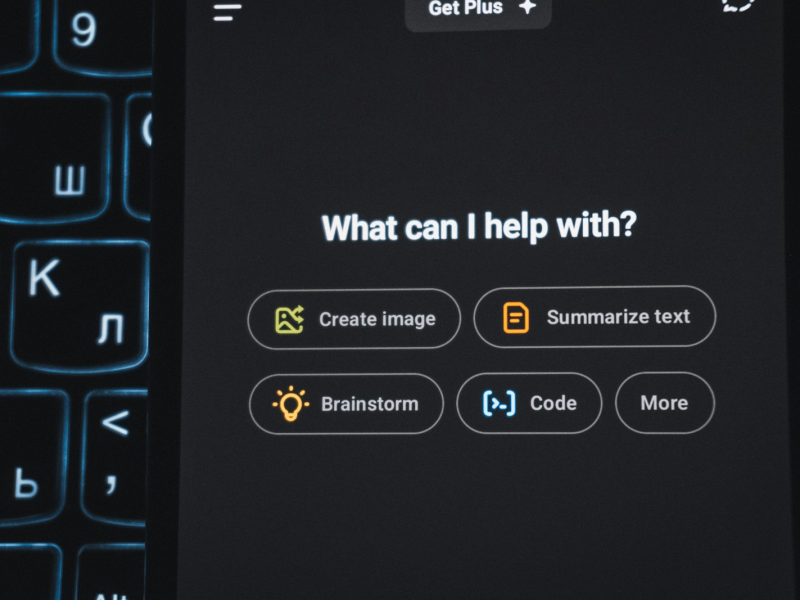
Instead of manually assembling every component, users can increasingly describe what they want in natural language. A user might ask an AI system to create a customer onboarding application, connect it to a database, generate an approval workflow and create a dashboard.
The platform can then generate the initial application structure.
This trend is already visible across the market. Gartner’s May 2026 research specifically describes the transition towards AI-augmented low-code application platforms, highlighting generative and agentic approaches as mechanisms for shortening the gap between application pilots and production systems.
Microsoft is also moving in this direction. In September 2026, Microsoft announced expanded Copilot functionality that includes a Code capability allowing users to build software, dashboards and applications using natural-language prompts, alongside agentic functionality and cost-management controls.
By 2027, therefore, the dominant no-code experience is likely to become increasingly conversational.
The user will describe the desired outcome, while the platform generates an initial solution that can then be refined visually.
This creates a major change in the skills required. Users will need less knowledge of where individual interface controls are located and more understanding of application architecture, data structures, workflows, APIs, security and business requirements.
Prediction 2: No-Code Will Become More Agentic
Generative AI is only one part of the transformation. The next stage is the integration of AI agents.
An AI-enabled no-code platform can generate an application. An agentic no-code platform could potentially perform multiple stages of development and operation on behalf of the user.
For example, an agent might analyse a business requirement, create a database structure, configure workflows, generate an interface, connect external services, test the application and identify potential errors.
Research published in 2026 demonstrates how no-code environments are already being explored for multi-agent systems. One recent research project describes a visual no-code environment for building, executing and inspecting heterogeneous AI agents, including human-in-the-loop workflows.
By 2027, this could turn no-code platforms into AI orchestration environments rather than simple visual application builders.
The implications are substantial.
The developer’s role may increasingly shift from manually constructing every application component towards defining requirements, validating generated solutions and managing the environment in which AI agents operate.
That will also make governance more important because the faster an AI system can create applications, the faster an organisation can accidentally create applications that have not been properly reviewed.
Prediction 3: No-Code and Low-Code Will Converge
The distinction between no-code and low-code is already becoming less straightforward.
No-code traditionally means that applications can be built without manually writing software code, while low-code allows developers or advanced users to introduce custom code where required.
In practice, many modern platforms incorporate both approaches.
A business user may build an application visually, while a professional developer adds custom integrations, advanced logic or external services. This hybrid model is likely to become increasingly common by 2027.
Gartner’s recent market research reflects this broader convergence. Its 2026 analysis of low-code application platforms highlights the increasing incorporation of agentic AI into development environments, while its 2025 research describes enterprise platforms as combining AI-assisted development, composable architectures and governance.
The result is likely to be less emphasis on the labels “no-code” and “low-code” and more emphasis on the capabilities required.
A platform might allow a business user to create 90% of an application without code and then provide professional developers with tools for the remaining 10%.
This makes the technology attractive to organisations attempting to increase development capacity without expanding traditional engineering teams at the same rate.
Prediction 4: Pricing Will Become More Usage-Based
Pricing is another area likely to change significantly by 2027.
Historically, many software platforms have used straightforward subscription models. Users pay per creator, application or workspace. As no-code platforms become more powerful, however, vendors have greater opportunities to charge according to consumption.
This could include application users, automation executions, database capacity, AI requests, API calls, agent activity and other forms of platform usage.
Microsoft already demonstrates this complexity. Its current Power Apps pricing includes user-based premium licensing alongside different capabilities, data limits, workflows and agentic functionality.
This creates both opportunities and challenges for organisations.
A small application used by a handful of employees could remain inexpensive. A heavily automated enterprise application involving thousands of users and large numbers of AI requests could become significantly more expensive.
The broader AI market is reinforcing this shift. Research into agentic software development economics suggests that AI-based development is moving towards more variable costs involving model tokens, tools, sandboxes, testing, CI and rework rather than purely predictable software-seat costs.
By 2027, organisations are therefore likely to pay greater attention to total cost of ownership rather than simply the advertised monthly subscription.
The cheapest no-code platform at the beginning of a project may not necessarily remain the cheapest once applications reach enterprise scale.
Prediction 5: No-Code Pricing Will Become More Transparent — and More Complicated
Greater usage-based pricing will probably create pressure for vendors to improve pricing transparency.
At the same time, the pricing structures themselves may become more complicated.
Platforms could introduce combinations of user licences, builder licences, execution limits, AI credits, data storage, integration charges and premium governance features.
This means organisations will increasingly need procurement processes specifically designed for no-code platforms.
Current market analysis already identifies licensing, vendor lock-in and scaling costs as important considerations when selecting low-code and no-code platforms. A 2026 enterprise buyer’s guide, for example, highlights governance, licensing and exit planning as central considerations rather than treating visual development capability as the sole purchasing criterion.
By 2027, successful no-code adoption is therefore likely to involve finance and procurement teams much earlier in the technology selection process.
Prediction 6: Governance Will Become a Core No-Code Skill
Governance is arguably the most important issue for the next phase of no-code adoption.
The original appeal of citizen development was that employees could create useful applications without waiting for central IT teams.
The problem is that the same capability can create uncontrolled application growth.
One employee creates an application. Another creates an automation. A third connects an external service. Eventually, an organisation may have hundreds or thousands of applications that IT did not originally design or document.
This creates questions around security, ownership, data protection, compliance, continuity and maintenance.
Gartner published dedicated research in 2025 on governing low-code platforms and followed this with September 2026 research focused specifically on governing low-code citizen development at scale. The emphasis is on allowing citizen developers to work quickly while maintaining application quality and security.
This is an important signal about where the industry is heading.
By 2027, enterprise no-code programmes are unlikely to be judged solely on how many applications employees can create. They will increasingly be evaluated on whether those applications can be created safely, consistently and sustainably.
Prediction 7: Governance Will Move Closer to “Governance as Code”
The next stage of governance may involve automated controls embedded directly into development platforms.
Instead of asking an IT department to manually review every application, organisations can establish policies that automatically check applications for specific conditions.
These might include approved data sources, authentication requirements, privacy controls, external integrations, user permissions, application ownership and security policies.
This broader approach is already appearing in AI governance research. A September 2026 academic paper proposed machine-checkable governance requirements that can operate through compliance pipelines rather than relying entirely on manual auditing.
Although this research concerns AI governance more broadly, the principle is highly relevant to AI-powered no-code development.
As platforms become increasingly automated, governance itself will need to become increasingly automated.
Prediction 8: Citizen Developers Will Need More Technical Knowledge
One of the interesting contradictions surrounding no-code is that the easier platforms become to use, the more important certain technical skills may become.
A user may not need to learn JavaScript or Python to build an application. But they may still need to understand databases, APIs, authentication, permissions, data structures, automation logic and application security.
This means the future no-code professional is unlikely to be someone who simply avoids technical concepts.
Instead, the emerging profile is closer to a business technologist: someone who understands a business problem and can translate it into a functioning digital solution.
That distinction matters for career development.
Learning a specific no-code platform may provide immediate practical capability, but broader skills in automation, databases, APIs, AI workflows and system design are likely to remain useful even when individual platforms change.
Prediction 9: No-Code Will Become More Important for Internal Business Applications
Enterprise adoption is likely to concentrate heavily on internal applications.
Examples include employee portals, approval systems, project dashboards, CRM extensions, inventory tools, operational workflows and departmental applications.
These applications often do not need the complexity of large consumer platforms, but they can nevertheless generate substantial value when they replace spreadsheets, email-based processes and manual administration.
This is one reason no-code can coexist with traditional software engineering.
Rather than replacing the systems that require specialist engineering, no-code can address the long tail of smaller business applications that would otherwise compete for limited development resources.
The market is already reflecting this direction. Current platform analysis identifies Microsoft Power Platform, OutSystems, Mendix, ServiceNow, Salesforce and other enterprise platforms as competing around application development, governance, integration and scalability rather than simply visual interface creation.
By 2027, internal application development may become one of the most established enterprise use cases for no-code.
Prediction 10: Security Will Become a Major Differentiator
Security will increasingly influence platform selection.
As no-code applications connect to corporate data, external APIs and AI services, the security implications become considerably greater than those associated with simple website builders.
Organisations will want to know who created an application, which data it can access, what integrations it uses, who can modify it and how activity is logged.
The arrival of AI agents adds another dimension.
An agent that can independently execute workflows potentially has greater operational access than a conventional application user.
Recent research into UK businesses illustrates the scale of the broader governance challenge. A September 2026 report cited by TechRadar found that 53% of surveyed UK firms had experienced AI agents breaching business policies or negatively affecting operations or customers, while only 49% of UK CIOs surveyed said they could produce an audit trail of an AI’s actions.
The specific findings concern AI agents rather than no-code platforms, but they highlight the wider governance environment into which AI-powered no-code development is expanding.
By 2027, secure identity management, permissions, logging and auditability are likely to be expected features rather than optional extras.
Prediction 11: Vendor Lock-In Will Become a Bigger Issue
No-code makes application creation faster, but applications can become highly dependent on the platform on which they were created.
This creates a familiar technology problem: vendor lock-in.
A business might invest thousands of hours building workflows, databases and integrations around a particular platform. Moving to another provider could then require rebuilding much of the application.
Current enterprise analysis already highlights lock-in and exit planning as major considerations in low-code platform selection.
By 2027, more organisations are likely to ask questions about portability before committing to a platform.
This could encourage greater adoption of APIs, open standards, external databases and modular architectures that reduce dependence on a single vendor.
Platform providers may also respond by improving export capabilities and interoperability.
Prediction 12: No-Code Will Not Replace Professional Developers
One of the most persistent predictions about no-code is that it will eliminate traditional software development.
The evidence increasingly points towards a more nuanced outcome.
Gartner’s 2025 research explicitly addressed the question of whether AI would replace low-code application platforms and concluded that AI code assistants and agents do not eliminate the need for low-code platforms. Instead, Gartner argues that low-code platforms can continue to provide value alongside AI capabilities.
The same principle applies to professional developers.
Complex distributed systems, safety-critical applications, advanced infrastructure, highly customised products and demanding performance requirements will continue to require specialist engineering.
No-code is more likely to change who builds what.
Business users may take ownership of simpler applications. Developers may focus more heavily on architecture, complex integrations, security, performance and high-value systems.
This could actually increase the importance of developers who understand how no-code environments fit into broader technology architectures.
What Expert and Market Signals Suggest About 2027
The strongest market signal is that major vendors and analysts are no longer treating low-code as a niche productivity technology.
Gartner’s 2026 market analysis says leading low-code vendors are embedding agentic AI directly into their development environments.
Gartner’s forecast also projects the low-code development technology market reaching $58.2 billion by 2029, with agentic AI and citizen development among the adoption drivers.
At the same time, Gartner’s 2026 governance research shows that the industry’s concerns are evolving. The question is no longer simply whether citizen development should be allowed. It is how organisations can support it at scale while maintaining quality and security.
The wider software development industry provides another signal.
Cisco’s Chief Product Officer Jeetu Patel recently said the company expects 70% of its software products to be written entirely with AI by the end of 2027, while also emphasising that human involvement remains important as AI changes software development.
That prediction is about AI-generated software rather than no-code specifically, but it illustrates the broader movement towards increasingly automated development environments.
The implication for no-code is significant: AI and visual development are converging around the same objective — reducing the amount of manual software construction required to turn an idea into a working application.
What No-Code Could Look Like in 2027
By 2027, a typical no-code development process could look very different from today’s drag-and-drop experience.
A business user may begin by describing a requirement in natural language. An AI assistant could then propose the application architecture, database structure and workflow.
The user could review the proposed design visually and make changes through conversation or direct manipulation.
The platform could automatically generate integrations, configure permissions, create test scenarios and identify potential security problems.
An AI agent could then assist with deployment and ongoing monitoring.
Professional developers could become involved when custom integrations, complex logic or architecture changes are required.
This would create a development model that combines natural-language prompting, visual development, automation, AI agents and professional engineering oversight.
The important point is that no-code would not necessarily mean “no technology knowledge”.
Instead, it would mean that more of the technology construction process is abstracted away from manual programming.
What This Means for People Learning No-Code Skills in 2026
For learners, 2026 is an important time to develop no-code skills because the market is moving towards a broader combination of technologies.
Learning a single platform can be useful, but learning how platforms work together is likely to be more valuable over time.
Skills in workflow automation, API integration, databases, AI agents, application design and governance can transfer across multiple platforms.
The most future-oriented approach is therefore not simply learning how to click through a particular no-code interface. It is learning how to design useful digital systems without relying entirely on conventional programming.
That could include building business applications, automating repetitive processes, integrating AI services and understanding the security and governance requirements that accompany them.
Recommended Online Courses to Build No-Code and Low-Code Skills in 2026
As no-code development increasingly incorporates AI, automation and enterprise application development, learners can benefit from combining practical no-code application building with workflow automation and low-code business application skills. The following courses provide relevant hands-on training and strong learner interest as of 2026.
Microsoft Power Apps and Power Automate: Build Business Apps — Udemy
Platform: Udemy
Level: Beginner to Intermediate
Focus: Microsoft Power Apps, Power Automate, business applications and workflow automation
This course provides practical experience with Microsoft Power Apps and Power Automate, including building functioning applications, connecting data sources such as Excel and SharePoint and implementing business workflows. It had a 4.6/5 rating from 1,966 ratings and more than 12,000 students when checked for this article, and was updated in February 2026.
The course is particularly relevant to the 2027 no-code outlook because Microsoft’s Power Platform is increasingly combining low-code development with AI, automation and enterprise governance. It provides learners with experience that extends beyond simple no-code website creation into business application development.
Course Link: Microsoft Power Apps and Power Automate: Build Business Apps — Udemy
The Complete No Code Developer Course: Build 23 Projects — Udemy
Platform: Udemy
Level: Beginner to Intermediate
Focus: No-code development, Webflow, Zapier, APIs, automation and digital products
This broader course covers multiple areas of no-code development, including Webflow, Zapier, APIs, automation, bots, data analysis, websites, mobile applications and membership websites. It had 4.2/5 from 983 ratings and more than 10,600 students when checked, with the course updated in December 2025.
Its multi-platform approach is useful for learners who want to understand the wider no-code ecosystem rather than becoming dependent on a single application builder. That is increasingly relevant as the industry moves towards interconnected no-code, low-code, automation and AI tools.
Course Link: The Complete No Code Developer Course: Build 23 Projects — Udemy
The Complete Zapier Course: From Beginner To Expert — Udemy
Platform: Udemy
Level: Beginner to Intermediate
Focus: Workflow automation, AI automation, integrations and AI agents
This course focuses on Zapier automation and covers workflow construction, application integrations, Zapier’s AI tools, interfaces, tables and AI agents. It was rated 4.7/5 from 862 ratings with more than 6,600 students when checked and was updated in September 2026. It is also marked as a Bestseller on Udemy.
The course is especially relevant to the predicted direction of no-code because automation is becoming increasingly intertwined with AI agents. Learning how applications communicate and how automated workflows are constructed provides a useful foundation for the agentic no-code environments likely to become more common through 2027.
Course Link: The Complete Zapier Course: From Beginner To Expert — Udemy
Final Thoughts
The future of no-code is unlikely to be defined by the elimination of programming.
Instead, 2027 is likely to mark a period in which software development becomes increasingly layered. Natural-language AI can handle more of the initial construction, visual platforms can abstract away technical complexity, automation tools can connect systems and professional developers can concentrate on architecture, security and complex engineering problems.
The market evidence already supports this direction. Gartner forecasts continued strong growth in low-code development technologies through 2029, while its 2026 research identifies agentic AI and citizen development as important drivers.
At the same time, governance is becoming a central issue. Gartner’s recent research on governing citizen development at scale demonstrates that organisations are moving from experimentation towards structured enterprise adoption.
For businesses, the challenge will therefore be balancing speed with control. For technology professionals, the opportunity will be learning how to combine no-code platforms with AI, automation, APIs and sound application architecture.
By 2027, the phrase “no-code” may itself become less important. The more significant trend will be the emergence of AI-assisted, visually assembled and increasingly autonomous software development.
For anyone building technology skills in 2026, understanding that transition could be more valuable than learning any single no-code platform in isolation.