


Intro
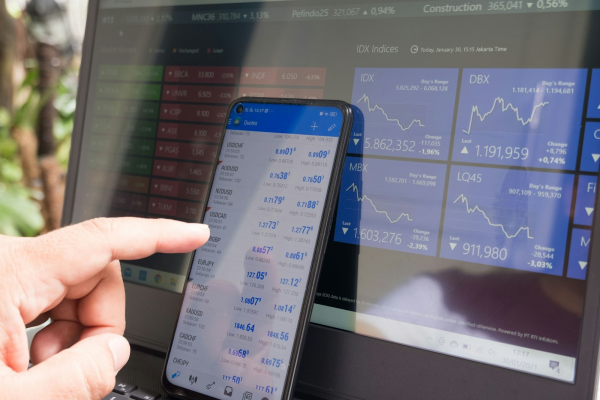
The foreign exchange market, commonly known as Forex or FX, is the largest and most liquid financial market in the world. Trillions of dollars are traded every day as governments, multinational corporations, financial institutions, hedge funds, investment firms, and individual traders exchange currencies to facilitate global commerce, manage investment portfolios, and speculate on currency price movements. As international trade, digital banking, and online trading platforms continue to expand, Forex trading remains one of the most dynamic and accessible areas of the global financial industry.
Unlike many financial careers that require extensive academic qualifications before entering the profession, Forex trading offers multiple pathways depending on an individual’s goals. Some professionals pursue careers with banks, proprietary trading firms, hedge funds, or investment companies, while others develop the knowledge and discipline needed to trade independently. Success, however, requires much more than simply learning how to place trades. Professional Forex traders rely on market analysis, risk management, economic research, trading psychology, and disciplined decision-making to build long-term consistency. With today’s high-quality online education, sophisticated trading platforms, and simulated trading environments, aspiring traders can develop these skills through structured learning before risking real capital.
Lets Dive In
Why Forex Trading Remains a High-Demand Financial Skill in 2026
Financial markets continue to evolve rapidly as global economies become increasingly interconnected. Currency prices respond constantly to interest rate decisions, inflation reports, employment data, geopolitical events, international trade, commodity prices, and central bank policies. Organisations operating internationally require specialists who understand these market dynamics and can manage currency exposure effectively.
Professional trading skills extend well beyond speculative trading. Banks, multinational corporations, investment firms, asset managers, and financial institutions employ market professionals to analyse currency markets, manage financial risk, develop investment strategies, and advise clients on international financial trends. As a result, a strong understanding of Forex markets has become valuable across numerous financial careers.
Technology has also transformed the trading industry. Modern traders have access to institutional-quality charting platforms, automated trading systems, artificial intelligence tools, economic calendars, algorithmic trading software, and real-time market data that were once available only to large financial institutions. This democratisation of technology has made learning Forex trading more accessible than ever before.
At the same time, the growing popularity of remote work has enabled many financial professionals to analyse markets, conduct research, and execute trades from virtually anywhere with a secure internet connection. While successful trading still requires discipline and preparation, the flexibility offered by today’s technology has broadened career opportunities across the global financial sector.
Understanding the Different Forex Career Pathways and Expected Earnings
The foreign exchange (Forex) market is the world’s largest and most liquid financial market, with trillions of dollars traded every day. While many people associate Forex solely with independent retail trading, the industry offers a broad range of professional career opportunities across banking, investment management, fintech, hedge funds, multinational corporations, and financial consulting. Careers in foreign exchange extend far beyond executing trades and include market analysis, risk management, quantitative finance, algorithmic trading, and financial technology development. Each pathway requires a different combination of financial knowledge, analytical ability, technical expertise, and risk management skills, allowing professionals to specialise according to their interests while benefiting from excellent long-term career prospects within the global financial sector.
Independent Forex Trading Careers
A Retail Forex Trader manages their own trading capital using online brokerage platforms to buy and sell currency pairs based on technical analysis, fundamental analysis, macroeconomic events, and disciplined risk management strategies. Unlike salaried financial positions, independent traders do not receive guaranteed income, and their profitability depends entirely on trading performance. While some experienced traders generate consistent long-term returns, many beginners experience losses while developing their skills.
Successful retail traders focus on preserving capital, maintaining disciplined risk management, continuously refining their trading strategies, and achieving sustainable long-term performance rather than pursuing unrealistic short-term profits.
Professional Trading Careers
A Proprietary (Prop) Trader trades using capital provided by a proprietary trading firm rather than personal funds. These professionals follow structured trading strategies while operating within strict risk management frameworks established by their firms. In return, successful traders typically receive a percentage of the profits they generate while benefiting from access to significantly larger trading accounts, advanced trading platforms, institutional research, and professional mentoring.
Depending on performance and the firm’s compensation model, experienced proprietary traders can earn from USD $100,000 to well over $300,000 annually, although a significant proportion of their income is performance-based rather than fixed salary.
Forex Research and Market Analysis Careers
A Forex Market Analyst researches global economic conditions, central bank policies, inflation data, employment figures, geopolitical developments, and overall market sentiment to produce currency forecasts and trading insights. These professionals work for investment banks, brokerages, financial media organisations, research firms, and institutional investors.
Entry-level Forex Market Analysts typically earn between USD $70,000 and $100,000 annually, progressing to USD $110,000 to $150,000 with experience, while senior analysts and market strategists at major financial institutions frequently earn USD $180,000 or more.
Currency Strategy and Macroeconomic Research Careers
A Currency Strategist develops long-term foreign exchange forecasts that support investment decisions made by institutional investors, multinational corporations, hedge funds, and portfolio managers. Combining macroeconomic analysis, financial modelling, and quantitative research, Currency Strategists help organisations understand global market trends and currency risks.
Professionals in this role generally earn between USD $90,000 and $140,000 annually, with experienced strategists advising institutional clients often receiving total compensation exceeding USD $200,000, particularly when performance bonuses are included.
Forex Risk Management Careers
A Risk Analyst specialises in identifying, measuring, and managing financial risks associated with currency fluctuations. These professionals help multinational organisations protect profits generated through international trade by developing hedging strategies, monitoring foreign exchange exposure, and ensuring compliance with enterprise risk management frameworks.
Risk Analysts typically earn between USD $85,000 and $125,000 annually, progressing to USD $140,000 to $190,000 as they assume responsibility for enterprise-wide financial risk management.
Quantitative Finance and Algorithmic Trading Careers
A Quantitative Trading Analyst (Quant) combines advanced mathematics, statistics, programming, machine learning, and financial modelling to develop algorithmic trading strategies that identify market opportunities using large volumes of historical and real-time data. Quantitative analysts remain among the highest-paid professionals within financial markets due to their specialised expertise.
Entry-level professionals commonly earn between USD $120,000 and $170,000 annually, while experienced quantitative specialists working for investment banks, hedge funds, or proprietary trading firms frequently receive USD $220,000 or more, excluding substantial performance bonuses.
Financial Technology and Trading Systems Careers
A Trading Systems Developer designs, builds, and maintains automated trading platforms, algorithmic trading systems, technical indicators, back-testing frameworks, and financial software using programming languages such as Python, C++, Java, or MQL5 for MetaTrader.
As algorithmic trading continues to dominate institutional financial markets, experienced Trading Systems Developers typically earn between USD $100,000 and $160,000 annually, with senior algorithmic trading specialists often exceeding USD $200,000 due to their combination of software engineering and quantitative finance expertise.
Forex Consulting and Advisory Careers
A Financial Markets Consultant advises financial institutions, investment firms, multinational corporations, and institutional investors on market conditions, foreign exchange risk management, trading strategies, and investment opportunities.
These professionals combine deep financial knowledge with strong communication, analytical, and consulting skills to help clients make informed strategic decisions. Financial Markets Consultants generally earn between USD $100,000 and $170,000 annually, with senior consultants and specialist advisers often earning significantly more depending on their expertise, client portfolio, and industry reputation.
Senior Forex Trading and Investment Leadership Careers
As professionals gain experience, many progress into senior leadership positions such as Portfolio Manager, Head of Trading, Chief Investment Officer (CIO), or Hedge Fund Trader, where they oversee substantial investment portfolios, manage trading teams, develop investment strategies, and make high-value financial decisions on behalf of institutional clients.
These leadership roles typically command base salaries ranging from USD $150,000 to $300,000 annually, with total compensation often increasing substantially through performance bonuses, profit-sharing arrangements, and long-term incentive programmes.
Your Forex Trading Career Roadmap: From Beginner to Professionally Competent
Building a successful career in Forex trading requires a long-term mindset, disciplined study, and consistent practice rather than attempting to generate profits as quickly as possible. Unlike many technical careers, success in financial markets depends not only on developing technical knowledge but also on mastering emotional discipline, risk management, and decision-making under pressure.
Months 1–3: Build Your Forex Market Foundations
During the first two to three months, aspiring traders should focus on understanding the structure of the global foreign exchange market, including how currency pairs are quoted, the role of central banks, commercial banks, institutional investors, hedge funds, and retail traders, as well as the economic forces that influence exchange rates such as inflation, interest rates, employment data, GDP growth, and geopolitical events.
Learners should develop a strong understanding of how the Forex market operates, including liquidity, trading sessions, market participants, and the relationship between economic events and currency movements. Building this foundation helps traders understand why markets move rather than simply reacting to price changes without context.
Learn Professional Trading Platforms and Develop Safe Trading Habits
Learners should become comfortable using professional trading platforms such as MetaTrader 5 and TradingView while studying order types, leverage, margin, liquidity, spreads, and market sessions.
Throughout this initial stage, all trading activity should be conducted exclusively on demo accounts, allowing learners to gain practical experience without exposing themselves to financial risk. Building strong habits early—such as documenting trades, reviewing performance, analysing mistakes, and developing patience—creates a solid foundation for long-term success.
Months 3–7: Develop a Structured Trading Strategy
Between the third and seventh months, learners should shift their attention from understanding the market to developing a structured trading methodology. This stage involves mastering technical analysis, including candlestick patterns, chart structures, trend identification, support and resistance, price action, market structure, volatility analysis, and multiple timeframe analysis.
At the same time, learners should develop a strong understanding of fundamental analysis and how major economic announcements, central bank decisions, inflation reports, employment data, and geopolitical developments influence currency markets.
Master Risk Management and Trading Psychology
Equal emphasis should be placed on learning professional risk management techniques, including position sizing, risk-to-reward ratios, portfolio exposure, drawdown management, and capital preservation, as these are often the deciding factors between long-term success and failure.
During this period, aspiring traders should create a written trading plan that clearly defines entry and exit criteria, risk parameters, trading rules, and performance objectives. Maintaining a comprehensive trading journal that records every trade, the reasoning behind each decision, emotional responses, and lessons learned is essential for developing professional-level discipline.
Rather than measuring progress by short-term profitability, learners should focus on executing their trading plan consistently across hundreds of simulated trades while using statistical analysis to identify strengths, weaknesses, and opportunities for improvement.
Months 8–18: Refine Trading Skills and Develop Professional Competence
During the final stage, typically between the eighth and eighteenth months, aspiring market professionals should concentrate on refining a clearly defined trading strategy while expanding their understanding of macroeconomics, monetary policy, quantitative analysis, and institutional trading practices.
Learners should become proficient in evaluating economic calendars, interpreting central bank communications, analysing market correlations, and using performance metrics such as expectancy, win rate, risk-adjusted returns, and maximum drawdown to assess the effectiveness of their trading strategy.
Those pursuing careers within banks, hedge funds, investment firms, or financial institutions should begin studying broader financial markets, portfolio management, derivatives, financial modelling, and professional certifications that strengthen their employability.
Transition Carefully Into Professional Trading
Individuals intending to trade independently should only consider transitioning from simulated trading to very small live positions after demonstrating consistent profitability, disciplined risk management, and emotional control over an extended period.
Trading always involves the possibility of financial loss, and no strategy can guarantee profits. Successful traders focus on protecting capital, managing risk, continuously improving their processes, and maintaining realistic expectations rather than pursuing unrealistic short-term returns.
Build Long-Term Success Through Continuous Development
Building a professional network, staying informed about global economic developments, participating in trading communities, and continuously refining analytical and technical skills are equally important for long-term success.
By combining structured education, extensive practical experience, disciplined risk management, and continuous learning, dedicated learners can develop the technical competence and professional judgement required to pursue entry-level roles in financial markets or continue progressing as responsible, well-prepared independent Forex traders.
Building the Technical Skills Employers and Professional Traders Value
Successful Forex trading is built on knowledge, discipline, and consistency rather than luck or speculation. While modern trading platforms make it easy to access global financial markets, long-term success depends on developing the analytical and risk management skills used by professional traders and institutional investors.
Whether your goal is to become a market analyst, proprietary trader, risk specialist, or independent Forex trader, employers and experienced professionals consistently value individuals who understand market structure, economic fundamentals, technical analysis, trading psychology, and capital preservation. Developing these competencies creates a strong foundation for sustainable career growth within the financial services industry.
Understanding How the Forex Market Operates
Before analysing charts or developing trading strategies, aspiring traders must understand the structure of the global foreign exchange market. Unlike traditional stock exchanges, Forex operates as a decentralised over-the-counter (OTC) market where financial institutions, corporations, governments, hedge funds, and individual traders exchange currencies around the clock.
Understanding currency pairs, bid and ask prices, spreads, liquidity, volatility, leverage, margin requirements, and order execution provides the foundation upon which every successful trading strategy is built. Traders should also understand the different market sessions, including the Asian, European, and North American trading sessions, and how overlapping sessions often generate increased trading activity.
A thorough understanding of market mechanics enables traders to make informed decisions while avoiding many of the common mistakes made by inexperienced participants.
Mastering Technical Analysis
Technical analysis remains one of the most widely used methods for evaluating currency markets. Rather than attempting to predict the future with certainty, technical analysis helps traders identify high-probability opportunities by studying historical price behaviour.
Professional traders learn to recognise trends, support and resistance levels, market structure, momentum, volatility, and recurring price patterns. They also develop an understanding of technical indicators such as moving averages, Relative Strength Index (RSI), MACD, Bollinger Bands, Fibonacci retracements, and the Average True Range (ATR).
The objective is not to use as many indicators as possible but to build a simple, repeatable trading process that supports disciplined decision-making. Consistency in applying a well-tested strategy is generally more valuable than continually changing trading methods in response to short-term market movements.
Learning Price Action Trading
Many experienced traders rely primarily on price action rather than heavily indicator-based systems. Price action focuses directly on the movement of price itself, allowing traders to interpret market sentiment through chart structure and candlestick behaviour.
Learners should become familiar with concepts such as higher highs, lower lows, breakouts, pullbacks, trend continuation, consolidation, and market reversals. Candlestick formations including pin bars, engulfing patterns, inside bars, and rejection candles often provide valuable insights into buyer and seller behaviour.
Price action analysis can be applied across multiple timeframes and trading styles, making it one of the most versatile skills within Forex trading.
Understanding Fundamental Analysis
While technical analysis focuses on charts, fundamental analysis examines the economic forces that drive currency values. Professional traders closely monitor economic indicators, central bank policies, inflation, employment data, gross domestic product (GDP), consumer confidence, and geopolitical developments that influence financial markets.
Interest rate decisions by central banks such as the U.S. Federal Reserve, the European Central Bank, the Bank of England, and the Bank of Japan frequently create significant market volatility. Understanding how monetary policy affects currency demand enables traders to anticipate longer-term market trends rather than reacting solely to short-term price movements.
Successful Forex professionals often combine technical and fundamental analysis to build a more complete understanding of market conditions.
Macroeconomics: Understanding the Bigger Picture
Macroeconomic knowledge provides traders with valuable context for interpreting market behaviour. Exchange rates are influenced by national economic performance, inflation expectations, government fiscal policy, international trade balances, commodity prices, and geopolitical events.
Understanding these relationships enables traders to appreciate why certain currencies strengthen or weaken over time. Rather than viewing individual market events in isolation, experienced professionals develop a broader perspective that supports more informed decision-making.
Macroeconomic awareness is particularly valuable for analysts, strategists, and institutional traders who evaluate long-term currency trends affecting international investment portfolios.
Risk Management: The Skill That Determines Longevity
Risk management is arguably the most important skill within Forex trading. Even highly accurate trading strategies can fail if poor risk management leads to excessive losses during unfavourable market conditions.
Professional traders carefully control position sizing, define acceptable levels of risk before entering every trade, and use stop-loss orders to protect trading capital. Many experienced professionals risk only a small percentage of their account on any single position, allowing them to withstand periods of market uncertainty without suffering catastrophic losses.
Understanding concepts such as risk-to-reward ratios, maximum drawdown, diversification, volatility-adjusted position sizing, and capital preservation helps traders remain active over the long term. Consistent profitability is typically achieved by managing losses effectively rather than attempting to maximise gains on every trade.
Trading Psychology and Emotional Discipline
Psychology plays a decisive role in trading success. Fear, greed, overconfidence, impatience, and frustration frequently lead traders to abandon well-developed strategies in favour of impulsive decisions.
Professional traders develop emotional discipline by following written trading plans, accepting losses as a normal part of trading, and evaluating performance objectively rather than emotionally. They understand that no strategy wins every trade and that long-term consistency depends on executing proven methods repeatedly over hundreds of trading opportunities.
Maintaining realistic expectations, exercising patience, and avoiding emotional decision-making are characteristics shared by many consistently successful traders.
Trading Journals and Performance Analysis
Continuous improvement requires accurate performance measurement. Professional traders maintain detailed trading journals documenting every trade, including entry and exit points, market conditions, reasoning behind decisions, emotional state, and post-trade analysis.
Reviewing historical trades helps identify recurring mistakes, strengths, and opportunities for improvement. Over time, this disciplined approach allows traders to refine strategies, improve consistency, and eliminate behaviours that negatively affect performance.
Employers also value candidates who demonstrate an analytical approach to evaluating their decision-making processes.
Trading Platforms Every Professional Should Know
Modern trading relies heavily on professional software platforms that provide market access, charting, technical analysis, and trade execution capabilities.
MetaTrader 4 (MT4) remains widely used throughout the Forex industry due to its extensive indicator library, Expert Advisor (EA) support, and strong broker compatibility. MetaTrader 5 (MT5) builds upon these capabilities by offering additional asset classes, improved charting, expanded order types, and enhanced analytical tools.
TradingView has become one of the world’s most popular charting platforms because of its intuitive interface, cloud-based accessibility, advanced technical analysis tools, and active trading community. Many professional traders use TradingView alongside their execution platforms to conduct market analysis and develop trading ideas.
Familiarity with multiple platforms improves flexibility while preparing traders for different brokerage environments.
Algorithmic Trading and Automation
Technology has significantly expanded the role of automation within financial markets. Algorithmic trading enables traders to execute predefined strategies automatically according to specific rules without requiring constant manual intervention.
Aspiring quantitative traders should understand the fundamentals of automated trading systems, strategy development, back-testing, optimisation, and performance evaluation. Basic programming skills in Python or MetaQuotes Language (MQL4/MQL5) enable traders to build indicators, automate repetitive tasks, and develop algorithmic strategies.
While algorithmic trading can improve consistency and execution speed, successful automation still depends on sound trading principles, robust testing, and disciplined risk management.
Portfolio and Performance Record Development
Unlike many professions, trading ability is demonstrated through measurable performance rather than qualifications alone. Individuals seeking employment with proprietary trading firms, investment companies, or financial institutions benefit from maintaining a documented record of their trading performance.
A professional trading portfolio should include a clearly defined trading strategy, detailed risk management framework, sample trade analyses, performance metrics, and evidence of disciplined decision-making over an extended period. Using demo accounts or small live accounts to establish a verifiable trading history allows learners to refine their approach before managing larger amounts of capital.
For those pursuing analytical or consulting careers, publishing market research, economic commentary, and educational content can further demonstrate expertise while strengthening professional credibility.
Soft Skills That Accelerate Career Progression
Technical expertise alone is rarely enough to succeed in financial markets. Employers consistently value communication, analytical thinking, adaptability, problem-solving, and attention to detail alongside technical trading knowledge.
Market professionals frequently explain complex economic developments to colleagues, clients, executives, and investors who may not possess specialist financial knowledge. The ability to communicate clearly, remain objective under pressure, and make rational decisions during volatile market conditions distinguishes highly effective professionals.
Successful traders also embrace continuous learning. Financial markets evolve constantly as new technologies, regulations, economic policies, and geopolitical developments influence global currency movements. Professionals who remain curious and committed to ongoing education are better positioned to adapt to changing market conditions.
Industry Certifications That Strengthen Your Career
Although independent traders are not required to hold formal certifications, recognised financial credentials can strengthen career opportunities within banks, investment firms, brokerages, and financial consulting organisations.
The Chartered Financial Analyst (CFA) designation remains one of the world’s most respected investment qualifications, covering portfolio management, financial analysis, ethics, economics, and capital markets. Professionals interested in institutional trading, investment research, or asset management often benefit significantly from this credential.
The Corporate Finance Institute (CFI) offers respected certifications in financial modelling, capital markets, and financial analysis that complement Forex knowledge while broadening career prospects. Additional qualifications covering financial risk management, investment analysis, quantitative finance, or economics can further strengthen professional profiles depending on individual career goals.
Rather than accumulating numerous certificates, aspiring professionals should focus on gaining recognised credentials while dedicating most of their effort to developing practical analytical and trading experience.
Building a Professional Reputation
Long-term success in Forex trading depends on credibility as much as technical ability. Employers, clients, and proprietary trading firms seek individuals who demonstrate discipline, professionalism, and ethical decision-making rather than unrealistic claims of guaranteed profits.
Building a professional reputation may involve publishing thoughtful market analysis, participating in financial communities, attending trading conferences, contributing to research discussions, or maintaining an educational blog that demonstrates analytical thinking. Networking with experienced traders, economists, and finance professionals also creates valuable opportunities for mentorship and career development.
By the time you begin applying for analyst, proprietary trading, or financial markets positions, your combination of technical knowledge, practical trading experience, documented performance, recognised certifications, and professional conduct should clearly demonstrate your readiness to contribute within a highly competitive financial environment.
The Best Online Courses to Build a Forex Trading Career in 2026
Selecting the right online training can significantly shorten the learning curve for aspiring Forex traders. The strongest programmes combine market theory with practical trading exercises, risk management techniques, technical and fundamental analysis, and strategy development. Rather than promising unrealistic profits, high-quality courses teach learners how to approach the markets with discipline, patience, and a long-term mindset. The following courses have been selected based on their popularity in 2026, consistently strong learner ratings, comprehensive curriculum, practical trading content, and industry reputation. Together, they provide an excellent pathway into both independent trading and broader financial market careers.
Financial Markets | Coursera
Platform: Coursera
Duration: 3 Weeks (10 Hours a week; Self-Paced)
Focus: Financial Markets, Risk Management, Investment Principles, Economics
Taught by Nobel Prize-winning economist Professor Robert Shiller of Yale University, this highly acclaimed course provides one of the strongest introductions to global financial markets available online. Learners explore how financial markets function, the role of banking and insurance systems, portfolio diversification, capital markets, investment principles, financial regulation, and the economic forces that influence market behaviour.
Rather than teaching short-term trading strategies, the course focuses on developing a comprehensive understanding of the principles that underpin modern financial markets. Through engaging lectures, real-world case studies, practical assessments, and discussions on financial innovation and market regulation, learners build the analytical skills needed to interpret market behaviour and make informed financial decisions.
Course Link: Financial Markets | Coursera
The Complete Foundation FOREX Trading Course | Udemy
Platform: Udemy
Duration: 9+ Hours (Self-Paced)
Focus: Forex Fundamentals, Technical Analysis, Trading Psychology, Risk Management
This bestselling beginner-friendly course provides a comprehensive introduction to the foreign exchange market and is designed for learners with little or no previous trading experience. Created by Mohsen Hassan, CEO of the Montreal Trading Group (now Bloom Trading), the course explains how the Forex market operates before progressing into practical trading skills. Learners study currency pairs, pips, lots, leverage, bid and ask prices, order types, broker selection, MetaTrader 4, economic calendars, and both technical and fundamental analysis.
A major strength of the course is its emphasis on disciplined trading rather than unrealistic profit expectations. Considerable attention is given to money management, position sizing, portfolio risk management, and trading psychology—skills that are essential for long-term success in financial markets but are often overlooked by beginner traders.
Course Link: The Complete Foundation FOREX Trading Course | Udemy
Forex Trading A-Z™ – With LIVE Examples of Forex Trading | Udemy
Platform: Udemy
Duration: 6+ Hours (Self-Paced)
Focus: Forex Strategy, Technical Analysis, Live Trading Examples
This highly rated Udemy course, created by the ForexBoat Team, provides a practical introduction to Forex trading through a combination of theory, live trading demonstrations, and hands-on platform tutorials. Designed specifically for beginners, the course explains how the foreign exchange market operates before progressing into essential trading concepts such as currency pairs, market participants, leverage, pips, spreads, order types, broker selection, and market sessions.
A key strength of the course is its emphasis on practical application rather than theory alone. Through real trading examples, platform walkthroughs, and structured lessons on risk management and trading discipline, learners develop the confidence to analyse currency markets while understanding the importance of capital preservation and responsible decision-making.
Course Link: Forex Trading A-Z™ – With LIVE Examples of Forex Trading | Udemy
Foreign Exchange Learning Resources | Corporate Finance Institute (CFI)
Platform: Corporate Finance Institute (CFI)
Duration: Self-Paced (Varies by Course)
Focus: Foreign Exchange Markets, Currency Trading, Exchange Rates, Risk Management, International Finance
Corporate Finance Institute (CFI) offers a comprehensive collection of learning resources covering the fundamentals of the foreign exchange (Forex) market, making it an excellent choice for learners seeking a professional understanding of how global currency markets operate. Through its structured courses and educational content, learners explore exchange rate mechanisms, currency pairs, market participants, macroeconomic influences, foreign exchange risk, and the role Forex plays within international trade, investment, and corporate finance.
The curriculum emphasises real-world financial decision-making rather than speculative trading, providing learners with a strong understanding of currency valuation, hedging strategies, financial modelling, and risk management used by businesses and financial institutions.
Course Link: Foreign Exchange Learning Resources | Corporate Finance Institute (CFI)
Forex – Trading Around the World | Coursera
Platform: Coursera
Duration: 1 Week (10 Hours; Self-Paced)
Focus: Foreign Exchange Markets, Currency Pairs, Market Participants, Risk Management, Trading Platforms
Developed by Interactive Brokers as part of the Practical Guide to Trading Specialization, this beginner-friendly course provides a practical introduction to the global foreign exchange market and how currencies are traded in real-world financial environments. Learners explore the structure of the Forex market, major and minor currency pairs, market participants, exchange rate drivers, margin accounts, and the risks associated with currency trading.
Rather than focusing on speculative trading strategies, the curriculum emphasises understanding market mechanics, currency exposure, international investing, and the practical application of Forex trading concepts. Through guided demonstrations, quizzes, case studies, and hands-on exercises using a professional trading platform, learners build a strong foundation in foreign exchange while developing the knowledge needed to progress into more advanced studies in technical analysis, fundamental analysis, trading psychology, and portfolio risk management.
Course Link: Forex – Trading Around the World | Coursera
Turning Learning Into Professional Trading
Completing online courses provides an excellent theoretical foundation, but becoming a consistently successful trader requires structured practice and disciplined execution. Aspiring traders should spend considerable time using demo accounts to develop and test strategies before committing real capital. This approach allows learners to gain experience without exposing themselves to unnecessary financial risk.
Maintaining a detailed trading journal is equally important. Recording every trade, including the reasons for entering and exiting positions, market conditions, emotional responses, and lessons learned, creates valuable opportunities for continuous improvement. Over time, reviewing this information helps identify recurring strengths, weaknesses, and behavioural patterns that influence trading performance.
Those pursuing institutional careers should also develop professional research skills by analysing macroeconomic events, central bank decisions, and market sentiment while producing written market commentary. Building a portfolio that includes trading plans, research reports, performance analysis, and documented risk management strategies demonstrates professionalism and analytical ability when applying for financial market positions.
Final Thoughts
Forex trading remains one of the world’s most accessible yet intellectually demanding financial careers. Beyond the opportunities available to independent traders, knowledge of the foreign exchange market provides valuable skills for careers in banking, investment management, proprietary trading, financial analysis, risk management, and economic research. As global financial markets continue evolving, professionals who understand currency movements, macroeconomics, technical analysis, and disciplined risk management will remain highly valued across the financial services industry.
Building a successful Forex career requires patience, continuous education, and realistic expectations. By mastering market fundamentals, technical and fundamental analysis, trading psychology, risk management, and professional trading platforms while developing a documented track record of disciplined decision-making, aspiring professionals can position themselves for long-term success. Combined with recognised online courses, practical experience, and a commitment to preserving capital above chasing short-term profits, these skills provide the strongest possible foundation for a sustainable career in the global foreign exchange market.