

Intro
The term metaverse has shifted from science fiction to tangible reality, creating new digital landscapes where people socialize, work, play, and interact using immersive technologies. As the metaverse evolves, so does the role of the web designer. No longer confined to flat screens and rigid interfaces, designers now face the challenge of creating intuitive user experiences (UX) and engaging user interfaces (UI) in spatial, three‑dimensional environments. Designing for the metaverse requires a different mindset — one rooted in spatial reasoning, human perception, real‑time interaction, and sensory immersion. For web designers aspiring to remain relevant and competitive in 2026 and beyond, understanding these new paradigms is essential.
This article explores the key principles of metaverse design, including UX and UI considerations for virtual environments, important tools and frameworks for crafting immersive web experiences, and top online courses you can take to build the necessary skills. Throughout, we emphasize accessible language and actionable insights — whether you are a seasoned web designer or just beginning your journey into immersive design.
Lets Dive In
From 2D Screens to Spatial Worlds: The New Era of Web Design
At its core, web design has always been about communication: delivering information through visual hierarchy, intuitive navigation, and functional interactions. Traditionally, these principles applied to two‑dimensional screens — desktops, tablets, and mobile devices. In the metaverse, however, the canvas itself becomes three‑dimensional space.
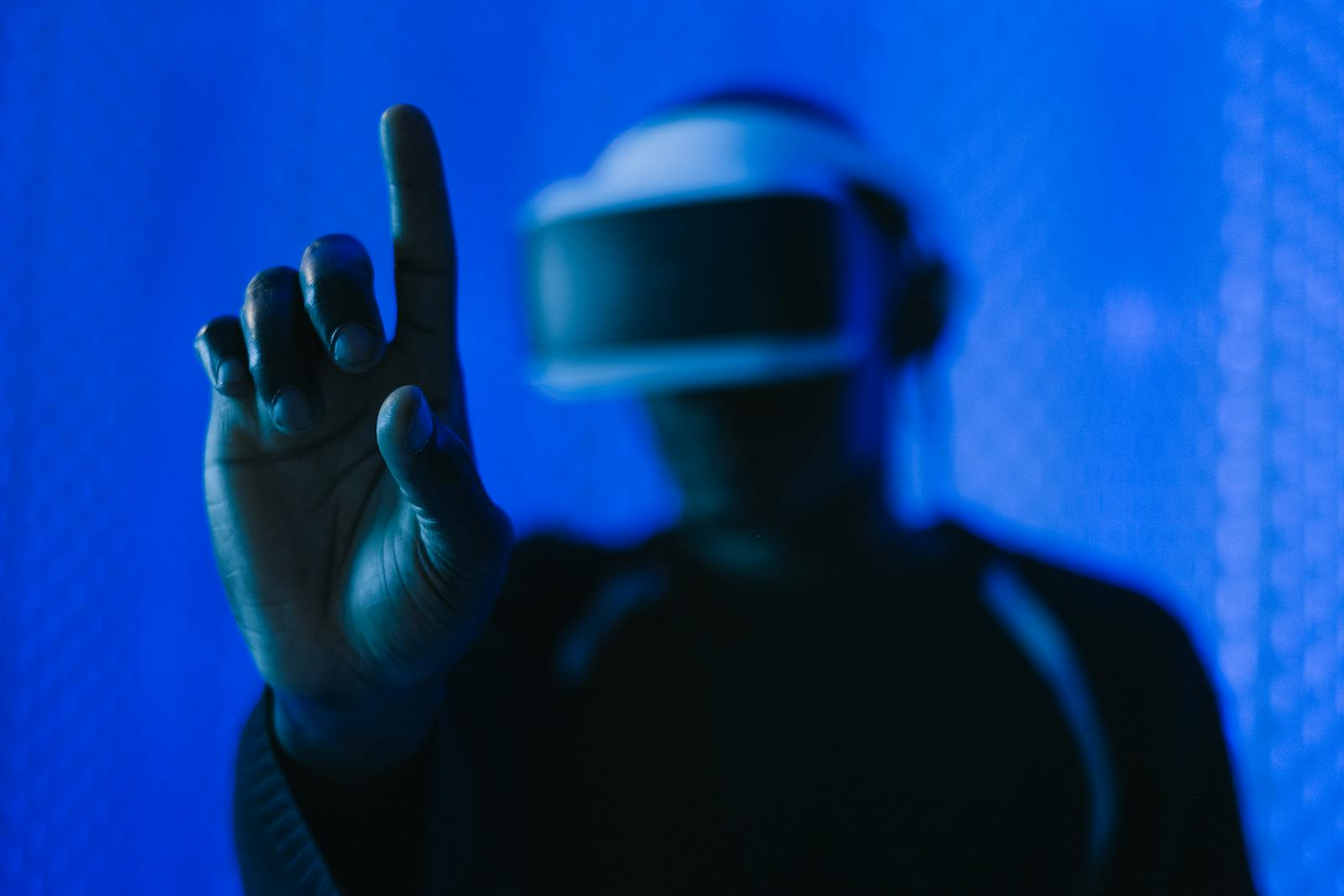
Designers no longer rely on a fixed viewport but must consider depth, movement, scale, and physical human experience. This shift transforms websites from flat pages to navigable worlds. Instead of clicking a button, users might reach out with a hand gesture. Instead of scrolling, they may walk through a virtual corridor of content. The immersive web challenges traditional assumptions about layout, interaction, and user comfort, demanding a more holistic understanding of human behavior.
Spatial web design blends visual design, UX psychology, interaction design, and real‑time feedback. Designers must anticipate the way users move, how they interpret visual cues in depth, and how interactions feel when they involve gesture, gaze, or voice. In this new dimension, digital experiences become more embodied, engaging multiple senses and situating users within an environment rather than placing content in a static frame.
The potential of the metaverse goes beyond gaming or entertainment. It extends to ecommerce, education, collaboration, storytelling, branding, health, and social connection. Brands are already experimenting with virtual showrooms, immersive events, and interactive 3D storytelling. For web designers, this means the skills learned today could define the next generation of digital experiences.
Understanding UX in the Metaverse
User experience in the metaverse is fundamentally different from traditional UX. The principles of learnability, usability, accessibility, and satisfaction still apply, but they manifest differently when users live inside the interface.
In spatial environments, designers must think about presence — the sensation that users are there. This involves crafting environments that feel believable, responsive, and comfortable with minimal cognitive strain. Traditional UX emphasizes ease of use through clear navigation menus and visual cues, but spatial UX demands additional considerations: where a user stands in relation to objects, how their gaze moves through space, how motion feels during interaction, and how boundaries and proximity affect comfort.
Designers must also prioritize motion comfort. Unlike static screens, VR and AR environments can cause motion sickness if transitions are abrupt or visual motion conflicts with physical perception. Smooth pacing, predictable movement paths, careful animation transitions, and minimizing sudden shifts are essential for user comfort.
Another dimension of metaverse UX is multimodal interaction. Users might interact using hand gestures, eye gaze, voice commands, or body movement. Designing experiences that accommodate various input methods enriches accessibility. For example, a visually guided spatial navigation may work for one user, while voice commands enhance accessibility for another. Anticipating these different interaction modes enables web designers to create inclusive interfaces that adapt to user preferences and abilities.
In the metaverse, social context also plays a major role in UX. Users may share space with others as avatars, requiring designers to think about personal space, social cues, and community safety. Designing spaces that support positive social interaction, reduce user isolation, and encourage healthy connection is as much a part of UX as button placement was in 2D design.
Redefining UI for Immersive Environments
User interface design in the metaverse extends UI elements into three dimensions. Traditional UI components — buttons, menus, forms, icons — still exist but take on new forms. Interface components become spatial objects that occupy virtual space rather than being constrained to fixed rectangular regions.
Imagine a floating navigational panel that appears when users tilt their head, or a contextual tool palette that anchors to the user’s virtual wrist. These interactions require designers to rethink UI language. Instead of planar layouts, UI becomes volumetric; instead of static menus, it becomes dynamic and context responsive.
Depth, lighting, shading, and motion become UI design elements that guide attention. Digital signposts might gently glow to draw focus, edges might animate softly to indicate interaction readiness, and interface components might react to sustained gaze or proximity.
Designers must balance creativity with clarity, ensuring users intuitively understand how to interact with each element. While skeuomorphic design — mimicking real‑world cues — may help early users transfer physical intuition into virtual spaces, overreliance on real‑world metaphors can constrain imagination. Skillful designers blend familiar cues with innovative spatial components that feel natural yet powerful.
Metaverse UI also demands careful consideration of visual hierarchy in 3D space. Traditional layouts rely on predictable grids and scroll patterns, but in immersive environments, hierarchy relies on spatial positioning, scale contrast, auditory cues, and motion cues. A critical interface element might float centrally at eye level, while auxiliary tools could live on the periphery or under a gesture‑activated reveal.
Accessibility remains central in UI design. Designers must ensure that users with motor or sensory differences can perceive and interact with spatial interfaces. Voice control, custom cursor options, adjustable scale, and alternative interaction modes help make virtual experiences inclusive.
Metaverse User Psychology and Behavioral Design
Designing for human behavior is already a cornerstone of UX, but in the metaverse, psychological considerations take on heightened importance. Spatial environments have the power to evoke emotion, influence behavior, and shape user habits. Designers have both an opportunity and a responsibility to consider psychological impact.
Presence and embodiment can strengthen emotional engagement. A virtual art exhibit may feel more moving because a user experiences it at human scale, with the ability to walk around installations and observe them from multiple angles. Similarly, a training simulation that mimics real‑world scenarios can accelerate learning by engaging memory and motor functions more deeply than a flat tutorial.
However, psychological comfort is not automatic. Misplaced scale, sensory overload, or confusing spatial metaphors can frustrate users. Designers must observe how users interpret visual and auditory cues, and adjust environments to minimize anxiety or discomfort. This requires iterative testing with real users in immersive contexts — not just theoretical design.
Social dynamics also influence metaverse experiences. Virtual spaces where people interact through avatars can create new forms of communication, social presence, and community norms. Designers must anticipate how users will behave in shared contexts and align interface design with healthy social interaction. Tools for moderation, clear communication channels, personal space boundaries, and safety features help ensure digital communities flourish without harm.
Understanding metaverse psychology means balancing freedom and structure: providing users the joy of exploration while offering clear signals to reduce confusion. Subtle environmental cues, like lighting, sound design, and spatial organization, influence focus, emotional tone, and user comfort.
Tools and Frameworks for Immersive Web Design
As the metaverse grows, so too does the ecosystem of tools that web designers can leverage. These range from browser‑based immersive frameworks to full‑featured game engines that support rich 3D experiences. Understanding these tools empowers designers to translate conceptual ideas into working realities.
One key technology powering immersive web experiences is WebXR — a set of web standards that enable virtual reality (VR) and augmented reality (AR) experiences directly inside the browser. Unlike traditional apps that require installation, WebXR brings immersive interfaces to the open web using familiar programming languages like JavaScript. This accessibility aligns with the web’s open philosophy and empowers web designers to deliver spatial experiences without steep technical barriers.
Built on top of WebXR, frameworks like A‑Frame offer a declarative, HTML‑style syntax for composing 3D scenes. A‑Frame abstracts away much of the complexity of low‑level graphics programming, making it approachable for designers familiar with web markup. Using A‑Frame, designers can define objects, animations, and interactions in code that feels similar to traditional web development, accelerating the transition into immersive design.
For more advanced graphical control and complex interactions, Three.js remains a go‑to JavaScript library. Three.js provides deep access to 3D rendering, camera control, animation systems, lighting, shadows, and physics integration. While it has a steeper learning curve than more declarative frameworks, it offers the flexibility needed for cutting‑edge immersive projects and serves as a foundation for many WebXR experiences.
Beyond browser‑based tools, many metaverse experiences leverage full‑featured game engines like Unity and Unreal Engine. These platforms provide advanced tools for real‑time rendering, physics simulation, animation, and immersive interaction logic. Unity, in particular, is widely adopted for VR development due to its extensive ecosystem and support for multiple platforms, while Unreal Engine is known for photo‑realistic visuals and cinematic quality, making it a favorite for high‑end immersive experiences and virtual production.
Emerging no‑code and low‑code platforms are also democratizing access to immersive design. Tools like ShapesXR allow designers to prototype virtual spaces without writing complex code, enabling rapid ideation and early user testing. These platforms help teams visualize, prototype, and iterate on spatial UX and UI without deep engineering expertise.
From design mockups to interactive prototypes, tools like Figma have begun integrating 3D and motion capabilities, helping designers visualize spatial UI before development. These tools bridge the gap between concept and execution, facilitating collaboration between designers and developers and enabling smoother workflows from ideation to immersive implementation.
Upskilling for Metaverse Design: Courses for 2026
Transitioning into metaverse design requires expanding your skill set beyond traditional web design. Structured learning through online courses can accelerate your understanding of immersive UX, spatial UI, and interactive 3D environments. Below are some of the top courses to upskill in 2026.
Foundations of Immersive UX & Interactive Design — Coursera
This specialization introduces the principles of immersive UX and interactive design, covering human-centered design, cognitive ergonomics, motion design for XR, and prototyping. Learners gain hands-on experience creating interactive 3D prototypes and spatial interfaces, bridging traditional web design with immersive experiences. The course is ideal for web designers who want to expand into 3D and VR/AR environments while building a portfolio of practical projects.
Google UX Design Professional Certificate — Coursera
This highly acclaimed professional certificate program from Google teaches foundational to intermediate UX design skills used widely across digital and immersive interfaces. It covers user‑centered design, research, wireframing, prototyping, usability testing, and building a professional UX portfolio that includes real end‑to‑end projects — all relevant whether you’re designing websites or spatial UI for the metaverse.
UX Design for Virtual Reality — Interaction Design Foundation
This intermediate-level course dives deep into VR UX, teaching designers to create meaningful experiences that leverage presence, embodiment, and spatial interaction. It emphasizes prototype development, user testing, and psychological considerations unique to VR, enabling designers to translate flat interface thinking into three-dimensional experiences.
Developing AR/VR/MR/XR Apps with WebXR, Unity & Unreal — Coursera
This highly reviewed intermediate course is part of the Extended Reality for Everybody specialization and teaches how to build immersive experiences across browser‑based WebXR, Unity, and Unreal Engine, providing a broader understanding of XR technologies than a WebXR‑only course. You’ll learn to create basic and advanced VR and AR scenes, understand differences between XR platforms, and develop XR applications with strong focus on interaction design and accessibility.
Unity VR Development Essentials — Unity Learn
This official Unity Learn course introduces designers and developers to building Virtual Reality (VR) applications with Unity, covering core VR concepts, spatial interaction, and hardware fundamentals. Learners gain practical experience with VR interactions like object manipulation, teleportation, and gesture controls, ensuring intuitive and engaging virtual environments. The course also emphasizes optimization techniques for performance, including frame rate management, asset efficiency, and latency reduction.
Final Thoughts
The metaverse is redefining the boundaries of web design, transforming traditional 2D interfaces into dynamic, immersive experiences that engage users on multiple sensory levels. Designing for these spatial environments requires a deep understanding of human perception, multimodal interaction, spatial information architecture, and psychological comfort. Web designers must think beyond conventional navigation and visual hierarchy, integrating intuitive 3D UI components, responsive feedback, and inclusive design practices to ensure accessible and enjoyable experiences for all users. Familiarity with cutting-edge tools and frameworks such as WebXR, A‑Frame, Three.js, Unity, Unreal Engine, and emerging no-code platforms empowers designers to translate creative visions into tangible, interactive virtual worlds while maintaining usability, engagement, and performance.
Upskilling in immersive UX and UI design is essential for staying competitive as the metaverse evolves in 2026 and beyond. By pursuing structured learning through online courses, workshops, and hands-on projects, designers can acquire the knowledge and practical skills needed to prototype, test, and refine spatial interfaces effectively. The future of web design in the metaverse belongs to those who combine human-centered thinking, spatial intelligence, and technical fluency, creating virtual experiences that are not only functional but emotionally engaging and socially responsible. Embracing these principles allows web designers to shape digital worlds where users can explore, interact, and connect in unprecedented ways, positioning themselves as leaders in the next frontier of the internet.