


Intro
The cryptocurrency market has always been defined by volatility, but bear markets introduce a very different psychological and structural environment for investors. When prices decline sharply and sentiment turns cautious, the focus shifts away from speculative gains and moves toward capital preservation, risk management, and portfolio visibility. In this environment, crypto portfolio trackers have become one of the most essential categories of tools in the entire blockchain ecosystem. A crypto portfolio tracker is no longer just a dashboard that displays token balances. It has evolved into a full-scale crypto portfolio management system capable of aggregating assets across exchanges, wallets, decentralized finance protocols, and even non-fungible token holdings. As the crypto market matures, especially during downturn cycles, investors increasingly demand accurate real-time data, performance analytics, tax reporting integration, and cross-chain visibility.
The increasing demand for crypto portfolio tracking tools during bear markets is driven by necessity rather than convenience. When portfolios are down, every percentage point matters. Investors need clarity on exposure, allocation, and risk concentration across multiple assets and platforms. This shift has transformed portfolio trackers into core infrastructure for retail traders, institutional investors, and long-term holders alike. This article explores the rise of crypto portfolio trackers in bear markets, how demand accelerates during downturns, how leading tools compare in functionality, and how community engagement, plugin ecosystems, and future innovations are shaping the next generation of crypto portfolio management platforms. It also highlights relevant upskilling opportunities in blockchain analytics, fintech, and crypto trading for 2026.
Lets Dive In
The Role of Crypto Portfolio Trackers in a Bear Market Environment
Bear markets fundamentally change investor behaviour in the cryptocurrency sector. During bullish phases, many participants rely on momentum and narrative-driven investing. However, when the market enters a prolonged downturn, emotions such as fear and uncertainty become dominant. In this environment, crypto portfolio trackers provide structure, transparency, and discipline.
One of the most important functions of crypto portfolio tracking software is portfolio aggregation. Most investors hold assets across multiple platforms including centralized exchanges such as Binance or Coinbase, decentralized wallets like MetaMask, and various DeFi protocols. Without a unified tracking system, it becomes extremely difficult to understand true portfolio value or exposure. Portfolio trackers solve this fragmentation problem by consolidating holdings into a single interface.
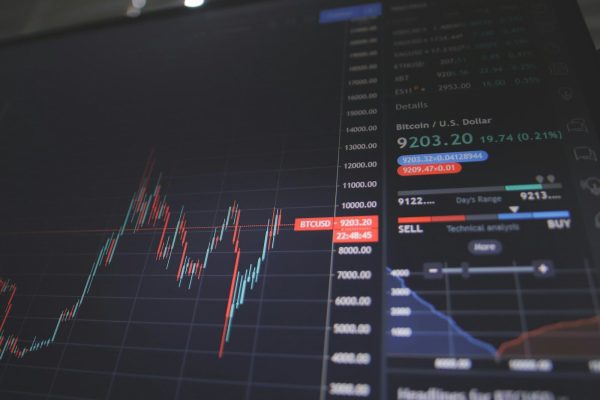
Another critical function is real-time profit and loss calculation. In a volatile bear market, assets can swing significantly within short timeframes. Portfolio trackers provide immediate visibility into unrealized losses, realized gains, and historical performance trends. This allows investors to make more rational decisions rather than reacting emotionally to short-term price movements.
Risk management is another key driver of adoption. During downturns, correlation risk becomes more apparent. Many cryptocurrencies tend to decline together, especially within the same sector such as decentralized finance tokens or layer one blockchain ecosystems. Advanced crypto portfolio trackers now offer risk analytics that highlight overexposure to specific categories, helping investors rebalance their portfolios more effectively.
Increasing Demand for Crypto Portfolio Monitoring Tools During Market Downturns
The demand for crypto portfolio monitoring tools rises significantly during bear markets due to structural changes in investor behaviour. When markets are rising, users often focus on acquiring assets and entering positions. When markets decline, the priority shifts toward monitoring existing holdings and minimizing downside risk.
One major factor driving demand is increased transaction complexity. After a bull market phase, many investors find themselves holding dozens or even hundreds of different tokens acquired across multiple cycles. These assets may be stored in different wallets or exchanged across various platforms. Without crypto portfolio tracking tools, managing this complexity becomes nearly impossible.
Another important factor is tax reporting. Bear markets often follow periods of high trading activity. This results in large volumes of taxable transactions that must be accurately recorded. Crypto tax software and portfolio trackers increasingly overlap in functionality, allowing users to generate detailed reports of gains, losses, and transaction histories.
Institutional interest also grows during downturns. Professional investors require detailed analytics on exposure, volatility, and liquidity risk. As a result, crypto portfolio management tools are evolving to include institutional-grade features such as performance benchmarking, multi-account aggregation, and compliance reporting.
Comparison of Leading Crypto Portfolio Tracking Tools
The crypto portfolio tracker ecosystem has become highly competitive, with several platforms dominating different segments of the market based on their features and user focus.
CoinStats is widely regarded as one of the most comprehensive crypto portfolio tracking applications. It offers real-time syncing across exchanges and wallets, strong DeFi integration, and mobile-first usability. It appeals particularly to active traders who require constant visibility into market movements and portfolio allocation changes.
Delta, owned by eToro, positions itself as a multi-asset investment tracker that supports both crypto and traditional financial assets. This makes it especially attractive to users who manage diversified portfolios that include stocks, ETFs, and digital currencies. Its strength lies in its clean interface and strong analytics capabilities for cross-asset comparison.
CoinGecko Portfolio is more entry-level but highly accessible. It allows users to track holdings based on manually entered data or connected exchange accounts. While it lacks advanced DeFi tracking or automation features, it remains popular due to its simplicity and integration with CoinGecko’s broader market data ecosystem.
Koinly occupies a slightly different segment of the market. It is primarily a crypto tax reporting and portfolio reconciliation platform. It excels at calculating capital gains, tracking cost basis across multiple wallets, and generating tax-ready reports. It is particularly valuable for users with high transaction volumes.
Zerion focuses heavily on decentralized finance and wallet-based portfolio tracking. It is designed for on-chain users who interact frequently with DeFi protocols. Its strength lies in real-time blockchain data integration, allowing users to track liquidity pools, staking positions, and NFT assets directly from their wallets.
Each of these crypto portfolio trackers serves a different user segment, but all share a common goal of improving visibility, accuracy, and control over digital assets.
The Evolution of Crypto Portfolio Management Features
Modern crypto portfolio management tools have evolved far beyond simple price tracking dashboards. In 2026, the most advanced platforms operate as financial intelligence systems.
Multi-chain integration is now a standard feature. With the rise of Ethereum layer 2 networks, alternative layer 1 ecosystems, and cross-chain bridges, investors often interact with dozens of blockchains. Portfolio trackers must therefore aggregate data across multiple networks in real time.
DeFi integration has also become a core requirement. Users now expect visibility into staking rewards, liquidity pool positions, lending protocols, and yield farming strategies. This has transformed portfolio tracking into a dynamic process that includes both static holdings and active yield-generating positions.
Real-time analytics have become increasingly sophisticated. Instead of simply showing balances, modern tools provide insights into allocation trends, sector exposure, and historical volatility. Some platforms even incorporate predictive analytics to highlight potential risk scenarios based on market conditions.
Automation and alerts are another major advancement. Investors can now set notifications for price changes, portfolio drawdowns, liquidation risks, and asset rebalancing opportunities. This level of automation reduces the need for constant manual monitoring and helps users respond more effectively to market movements.
Community Engagement and Its Impact on Portfolio Tracker Growth
Community engagement plays a crucial role in the adoption and evolution of crypto portfolio trackers. The cryptocurrency industry is heavily influenced by online communities, including forums, social platforms, and developer ecosystems.
Users frequently share feedback about missing features, usability issues, and data accuracy concerns. This feedback loop has pushed developers to improve transparency, enhance API reliability, and expand integration capabilities. Many of the most popular features in modern crypto portfolio trackers were initially requested by users in community discussions.
Another important aspect of community influence is education. Many investors first learn about portfolio tracking tools through social media, YouTube tutorials, or crypto discussion groups. This organic discovery process contributes significantly to user growth, especially during bear markets when individuals seek more structured approaches to managing losses.
Trust is also a major theme within community engagement. Users often express concerns about data privacy, exchange API permissions, and platform security. As a result, portfolio tracker developers are increasingly focusing on read-only integrations, improved encryption standards, and decentralized tracking solutions.
Plugin Ecosystems and the Future of Crypto Portfolio Trackers
One of the most significant developments in crypto portfolio management is the rise of plugin ecosystems. Instead of offering fixed functionality, modern platforms are moving toward modular architectures that allow users to customize their experience.
API-first design has enabled developers to build third-party tools that integrate directly into portfolio tracking platforms. These include tax calculation plugins, trading signal integrations, AI-driven analytics modules, and advanced risk assessment dashboards.
This modular approach is transforming portfolio trackers into extensible financial operating systems. Users can effectively build personalized dashboards that reflect their specific investment strategies, whether they are focused on long-term holding, active trading, or DeFi yield optimization.
Artificial intelligence is also playing a growing role in this ecosystem. AI-powered plugins can analyse portfolio composition, identify risk concentration, and suggest potential rebalancing strategies. Some tools even generate natural language summaries of portfolio performance, making complex financial data more accessible.
Growth Opportunities in Crypto Portfolio Tracking Technology
The growth opportunities in crypto portfolio tracking technology are closely tied to the increasing complexity and institutionalisation of the digital asset market. As cryptocurrencies expand across multiple chains, DeFi ecosystems, and tokenised real-world assets, investors require more advanced tools to aggregate and interpret fragmented financial data.
This creates strong demand for portfolio trackers that go beyond simple balance displays and instead deliver real-time analytics, risk exposure insights, yield tracking, and cross-chain portfolio visibility. At the same time, the rise of DeFi and staking mechanisms has added new layers of financial activity that traditional tracking tools were never designed to handle, accelerating innovation in data aggregation and blockchain analytics.
Another major opportunity lies in institutional adoption and the convergence of crypto with traditional finance. Hedge funds, asset managers, and corporate treasuries increasingly require enterprise-grade portfolio management systems that support compliance reporting, multi-account aggregation, and advanced risk modelling. This is pushing portfolio trackers toward becoming full-scale financial intelligence platforms rather than standalone tools.
As AI integration, automation, and plugin ecosystems continue to evolve, these platforms are also moving toward modular, extensible architectures where users can customise analytics and decision-support systems. In this environment, crypto portfolio tracking technology is evolving into a core layer of digital finance infrastructure, bridging blockchain data with institutional-grade financial analysis.
The Best Blockchain, Data & Fintech Upskilling Courses in 2026
As crypto portfolio trackers, blockchain analytics platforms, and AI-driven financial systems continue to evolve in 2026, the demand for multidisciplinary skills has grown significantly. Understanding digital assets now requires more than just trading knowledge. Professionals are expected to combine blockchain fundamentals, data science, quantitative finance, and fintech product thinking in order to fully interpret and build modern crypto portfolio management systems.
From decentralised finance (DeFi) and smart contract development to machine learning for financial markets and AI-driven decision systems, the learning landscape has become increasingly interconnected. The following courses represent some of the most relevant and high-impact pathways for developing expertise in blockchain technology, crypto analytics, and fintech systems design.
Blockchain Specialisation (Coursera)
Platform: Coursera
Duration: Self-paced (typically 2 months depending on pace)
Focus: Blockchain fundamentals, distributed systems, cryptographic principles, decentralised applications, smart contracts
The Blockchain Specialisation on Coursera provides one of the most structured and academically grounded introductions to blockchain technology. It covers the core principles behind distributed ledger systems, consensus mechanisms, cryptography, and real-world blockchain applications.
In the context of crypto portfolio trackers and digital asset management tools, this course is particularly valuable because it explains how blockchain data is generated, validated, and structured. Understanding these mechanisms is essential for interpreting on-chain portfolio data, integrating wallet APIs, and analysing cross-chain transactions.
As blockchain adoption continues to expand across DeFi, NFTs, and institutional finance, this specialisation serves as a foundational entry point for anyone looking to work with crypto infrastructure, portfolio analytics systems, or Web3 development environments.
Bitcoin and Cryptocurrency Technologies (Princeton University via Coursera)
Platform: Coursera
Duration: 2 weeks (10 hours a week: Self-paced)
Focus: Bitcoin architecture, decentralised consensus, cryptocurrency systems, economic principles of digital currency
The Bitcoin and Cryptocurrency Technologies course from Princeton University offers a deep academic exploration of Bitcoin and the broader cryptocurrency ecosystem. It examines how Bitcoin functions as a decentralised payment system, how consensus is achieved without central authority, and how cryptographic security underpins the network.
For professionals working with crypto portfolio trackers, this course provides essential insight into the economic and technical structure of digital assets. It helps learners understand why certain assets behave differently in market cycles and how blockchain networks process and store financial data.
This knowledge is particularly useful during bear markets, where understanding fundamental value, network activity, and transaction behaviour becomes more important than speculative price action. It also supports better interpretation of portfolio analytics and risk exposure across different crypto assets.
Decentralized Finance (DeFi): The Future of Finance Specialization (Duke University – Coursera)
Platform: Coursera (Duke University)
Duration: 3-4 month (10 hours a week: Self-paced)
Focus: Decentralized finance systems, DeFi protocols, lending and borrowing mechanisms, liquidity pools, decentralised exchanges, financial risk in blockchain ecosystems
The Decentralized Finance (DeFi): The Future of Finance Specialization on Coursera provides a structured and academically grounded introduction to the rapidly evolving DeFi ecosystem. It explains how decentralized financial systems operate, covering core concepts such as lending protocols, automated market makers, tokenisation, and the removal of traditional financial intermediaries through blockchain-based infrastructure.
In the context of crypto portfolio trackers and digital asset management tools, this course is particularly valuable because it helps learners understand how DeFi activity is structured and recorded on-chain. This knowledge is essential for interpreting staking positions, liquidity pool exposure, yield farming returns, and other DeFi-based portfolio components that modern tracking platforms now integrate.
Tiny Machine Learning (TinyML) for Scale Professional Certificate (HarvardX – edX)
Platform: edX (HarvardX)
Duration: 4 months (self paced; depending on pace)
Focus: TinyML fundamentals, edge AI, embedded machine learning, TensorFlow Lite, on-device AI systems
The Tiny Machine Learning (TinyML) for Scale Professional Certificate on edX introduces the fundamentals of building and deploying machine learning models on low-power, resource-constrained devices. It focuses on how AI models can operate efficiently at the edge, covering core concepts such as model optimisation, embedded systems, and real-time inference using tools like TensorFlow Lite.
In the context of crypto portfolio trackers and digital asset systems, this course is useful for understanding how lightweight AI models can be deployed in real-time environments. These principles are increasingly relevant as financial applications move toward mobile-first analytics, low-latency data processing, and AI-assisted decision-making tools.
MITx Computational Thinking Using Python XSeries Program (edX)
Platform: edX (MITx)
Duration: 5 months (Self-paced; depending on pace)
Focus: Computational thinking, Python programming fundamentals, algorithms, data structures, problem solving, statistical and simulation-based modelling
The MITx Computational Thinking Using Python XSeries Program on edX provides a structured introduction to programming and problem solving using Python. Developed by MIT, it focuses on building computational thinking skills, teaching learners how to break down complex problems, design algorithms, and implement solutions using Python. The programme also introduces foundational concepts such as data structures, debugging, and basic algorithmic complexity, making it a strong entry point into computer science and data-driven thinking.
In the context of crypto portfolio trackers and digital asset analytics, this course is particularly valuable because it develops the core programming and analytical skills required to work with financial data. Understanding Python and computational thinking is essential for processing blockchain data, building portfolio tracking models, and analysing market trends across multiple assets and exchanges.
Final Thoughts
The rise of crypto portfolio trackers in bear markets reflects a deeper structural shift in how digital asset investors interact with financial data, risk, and decision-making. What began as simple price-tracking dashboards has evolved into integrated crypto portfolio management ecosystems that combine blockchain analytics, DeFi tracking, tax reporting, and increasingly, AI-driven financial intelligence. During market downturns, this evolution becomes even more pronounced, as investors prioritise visibility, capital preservation, and risk-adjusted decision-making over speculation. The ability to aggregate holdings across multiple wallets, exchanges, and protocols has become essential, not optional, and portfolio trackers now function as the central nervous system of modern crypto investing.
Looking ahead, the future of crypto portfolio tracking will be defined by convergence. Blockchain infrastructure, machine learning, quantitative finance, and fintech product design are merging into unified systems that do far more than track balances—they interpret, forecast, and guide financial behaviour. As AI for finance, DeFi analytics, and cross-chain data systems continue to mature, portfolio trackers will increasingly resemble intelligent financial operating systems rather than static dashboards. This makes continuous upskilling in blockchain fundamentals, data analytics, and fintech systems not just valuable but necessary for anyone participating in the evolving digital asset economy. In this environment, the most successful investors and professionals will be those who can bridge technical understanding with financial insight, using next-generation tools to navigate increasingly complex and volatile markets.