








Intro
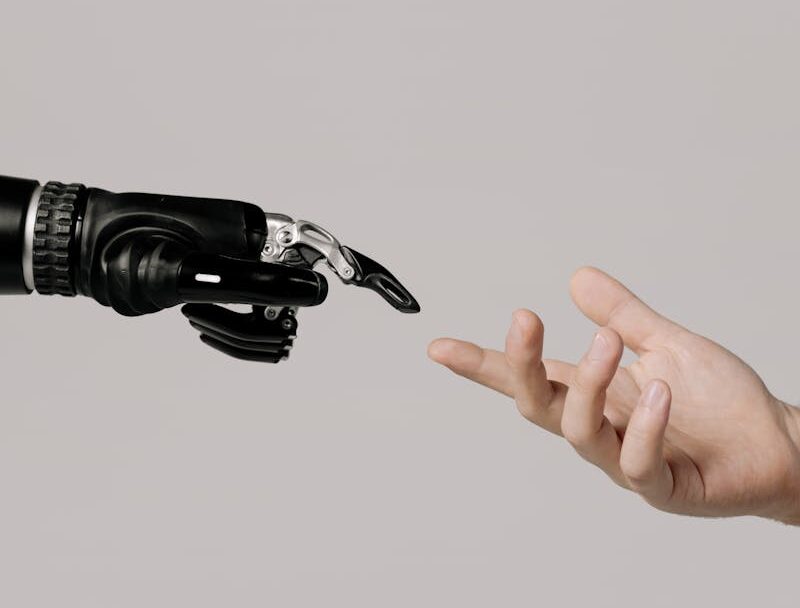
In 2025, the digital tech landscape and freelancing world are no longer asking whether artificial intelligence will transform work. The question now is how to collaborate with AI tools rather than compete against them. For tech workers, freelancers, designers, content creators, and all digital professionals, the age of AI collaboration demands a shift in mindset. Success will come from combining human judgment, creativity, domain expertise, and ethical awareness with the speed, scale, and automation power of machines. Human + machine skills are the new normal, and those who embrace this hybrid model will thrive. Artificial intelligence has matured to a point where many repetitive, predictable tasks are no longer bottlenecks. Text generation, content summarization, image creation, prototyping, data cleanup, and basic coding scaffolding are now areas where AI tools can produce competent first drafts quickly. But machines still cannot reliably replace what humans do best: interpreting nuance, making ethical decisions, understanding culture and context, storytelling, persuasion, strategy, and emotionally resonant design.
The combination of human strengths and machine automation boosts productivity exponentially. AI collaboration means machines handle the heavy lifting—the repetitive patterns, the brute-force data work, the first pass of content generation—while humans intervene to steer direction, refine tone, add originality, ensure accuracy, and maintain ethical clarity. The result is higher throughput without sacrificing quality. In competitive markets, especially among freelancers, clients increasingly expect outcomes delivered faster, with smarter thinking, not just raw volume. Trust and transparency also drive this shift. Organizations and clients want to know that using AI doesn’t lead to hallucinations, bias, or decontextualized results. Humans are needed in the loop to evaluate, verify, and provide feedback. Emotional intelligence, domain knowledge, ethics, and critical thinking all complement automation in ways machines cannot replicate, making the partnership between people and AI inevitable.
Lets Dive In
The Skills That Complement Automation
Human + machine collaboration isn’t just about knowing how to click buttons or use tools; it involves skill sets that machines don’t yet possess (at least not reliably) and which amplify what AI can deliver. Digital tech workers and freelancers should invest in strengthening these areas.
First is prompt engineering or prompt design. Learning how to craft effective instructions to AI models—whether for text, image, or code generation—is now essential. Knowing techniques like zero-shot and few-shot prompting, chain-of-thought, controlling tone, defining constraints, refining outputs, and iterating with feedback loops makes the difference between mediocre AI outputs and high-quality ones.
Next comes critical thinking and model evaluation. AI outputs can include errors, biased reflections of training data, missing context, or simply misleading data. Professionals must be able to fact-check, audit, evaluate reliability, compare across models, spot where the AI may fail, and decide when to override or adjust model outputs.
Domain expertise remains hugely valuable. Whether in marketing, legal, health, finance, education, or any specialized field, having deep subject matter knowledge allows you to guide AI toward better choices, understand what matters, ask the right questions, and deliver outcomes that are meaningful in context. Storytelling, narrative structure, UX design, content strategy—all remain human strengths, and they work in tandem with AI’s capacity for scale and repetition.
Soft skills grow in importance. Emotional intelligence, communication, clients relationships, ethics, personal judgement, and adaptability. Being able to explain your process to clients, manage expectations, handle ambiguity, and provide creative leadership are skills that machines cannot replace in 2025.
Finally, technical data literacy or basic machine learning understanding helps. Knowing what makes a model biased, how training data works, what limitations exist, how embeddings or retrieval-augmented generation (RAG) function, how to monitor performance, and how to maintain pipelines for up-to-date outputs will set apart those who simply use AI tools from those who integrate AI into robust workflows.
How to Reshape Workflows for Effective AI Collaboration
To move from theory to practice, freelancers and digital tech professionals need to adjust how they plan, execute, and deliver projects. It’s not enough to add AI; workflows must integrate human + machine interaction at multiple stages.
One way is to begin every project with a strategy session that asks: which parts of the work are repetitive, which parts need creativity, which parts need domain-specific nuance, and where the client will expect human oversight. Then design your project plan so that AI handles predictable content generation, draft work, data aggregation, first pass code scaffolding, and similar tasks, while the human work focuses on evaluation, iteration, customization, and polishing.
Another change is to build feedback loops. After generating AI drafts or outputs, set aside structured time for human review. Test multiple prompts, test for biases, compare across model outputs, refine until quality standards are met. Capture what works and what doesn’t (e.g. maintain a prompt bank or best practice examples) so that over time your output becomes more reliable, consistent, and higher quality.
You should also adjust pricing and client communication. With AI, the turnaround can be faster, but clients will want assurance of quality. Part of your value becomes explaining the human oversight, the verification steps, how you avoid risks of bias or inaccuracy. You can offer AI-augmented packages, faster drafts with AI assistance plus human polish. It’s reasonable to charge more for final editing, customization, domain adaptations, safety checks, and ensuring that ethical or contextual issues are handled.
Another workflow shift is tools integration. Using AI tools, APIs, model management tools, prompt versioning, collaboration platforms, and project management software can combine to streamline your delivery. Automation tools for tedious tasks (file naming, version control, summarization, translation, format conversion) let you focus more on higher-level thinking. For instance, integrating your AI tool (chatbot, text generation, image generation) with content calendars or code repositories, and using monitoring dashboards to flag problematic outputs.
Managing Risks and Ethics in Human + Machine Collaboration
Working alongside AI tools brings great opportunity—but also significant responsibility. Ethical use, bias mitigation, avoiding hallucinations, respecting privacy and transparency are no longer optional but expected. Clients and consumers increasingly care about not just what you deliver, but how you delivered it.
One challenge is hallucination—AI confidently outputting false or misleading information. The only guard against that is human fact-checking, corroboration, and maintaining skepticism. If your work domain involves real consequences (finance, health, law, policy), these steps are especially critical. Always verify, cite, test across multiple sources, or use tools that cross-verify.
Bias is another risk: biased training data may produce outputs that perpetuate stereotypes or exclude certain perspectives. Human oversight and inclusion of diversified data, testing for bias, feedback loops that include perspectives from diverse users can help.
Transparency with clients is essential. If you use AI tools in generating drafts, data, or decision suggestions, let clients know where human judgment has intervened, what safeguards are applied, and what limitations exist. That builds trust.
Privacy matters. When sending content to AI tools (especially cloud or third-party models), ensure you have the right to share data, that no sensitive information is exposed, that confidentiality is preserved.
Ethical frameworks or guidelines are increasingly important in digital tech and freelancing. Many online course platforms now include units or modules focused on AI governance, ethics, fairness, safety. Incorporate those into your learning.
Online Courses to Build Human + Machine Skills in 2025
To grow your human + machine skills as a digital tech or freelance worker, enrolling in well-designed online courses is one of the fastest ways. Look for courses that focus on prompt engineering, generative AI, evaluation, ethics, domain specialization, human-in-the-loop workflows. Here are some of the top-selling, high-impact courses in 2025 worth your investment.
One of the standout offerings is The Complete Prompt Engineering for AI Bootcamp (2025) on Udemy. This lab-driven course covers prompt engineering across multiple models including GPT-4, Stable Diffusion, GitHub Copilot. You learn about modality-specific prompting (text, images, code), prompt optimization, handling trade-offs of cost vs latency, and includes real-world projects. The hands-on nature makes it especially valuable for freelancers who want directly applicable skills.
Another strong option is Google Cloud’s Prompt Engineering Course offered via Google Cloud Skills Boost. This course teaches foundations of prompt engineering in a cloud environment, how to design prompts for structured and unstructured tasks, and how to integrate prompts into real-world workflows using Google’s AI tools like Vertex AI and Gemini. For those working with enterprise clients or scale, the cloud-native context matters.
For beginners or those coming from non-technical backgrounds, GUVI’s AI/ML Course with Prompt Engineering is a comprehensive program that combines foundational AI/ML knowledge with prompt engineering. It includes modules on few-shot and zero-shot prompting, practical projects, and is useful if you want both breadth (AI fundamentals) and depth (how to work with LLMs).
Courses like LangChain- Develop AI Agents with LangChain & LangGraph – Udemy provide good value for learners who want hands-on experience building actual prompt workflows and chaining prompts, combining multiple models, or integrating AI into tools and platforms. If you build chatbots, agents, or custom tools, this class offers concrete skills.
Learners interested in ethics, governance, fairness and risk mitigation should look for courses that include modules on responsible AI use. The open-source LearnPrompting.org is one such resource with strong community support, advanced prompt logic, and ethical/practical guides. It is useful both for beginners and advanced users who want to understand not only how to produce outputs but how to ensure quality, safety, fairness.
If you want to master prompt design specifically for developers or integrate AI into software applications, DeepLearning.AI’s “ChatGPT Prompt Engineering for Developers” is highly recommended. It tends to include case studies, live examples, and teaches pattern-based prompting plus evaluation, which are essential skills when working with clients who expect reliability, reproducibility, and responsiveness.
Finally, Google Cloud and Google-affiliated AI training are increasingly in demand because they align with enterprise tools and large-scale deployments. Many freelancers who want to serve corporate clients or build products rather than just content work will benefit deeply from expertise in those platforms.
How SEO, Freelancer Branding, and AI Collaboration Link Together
In addition to mastering your craft, branding yourself as someone who can work with AI tools becomes a differentiator. Clients increasingly search for freelancers who are “AI-savvy,” “prompt engineering expert,” “generative AI specialist,” or “human + machine collaboration.” When your website, portfolio, and LinkedIn or Upwork profile include these keywords judiciously, you improve your visibility in search and in platform searches. Using phrases like “working with AI tools,” “AI collaboration,” “prompt engineering,” “ethical AI,” “AI augmented productivity,” and “automation + human creativity” helps both SEO and perceptions.
When producing content, blog posts, case studies, or project descriptions, include your process: how you use AI, how you ensure human oversight, how you refine outputs, what your turnaround speed is, and how you mitigate risks. Prospective clients reading this will see you as trustworthy and capable of delivering high-quality, responsible work in the era of AI. That in turn leads to better rates, referrals, and long-term partnerships.
Final Thoughts
Looking ahead, AI collaboration will only deepen. Tools will become more adaptive, offering real-time feedback, more explainability, improved integration into daily workflows, and stronger customization. Freelancers who develop human + machine skills now will adapt more easily as AI models evolve, as new modalities like video, voice, and immersive technologies gain prominence, and as clients demand not just automation but holistic creative and strategic outcomes.
Trust frameworks, ethical AI certifications, and standards for transparency and fairness in AI output will increasingly appear in contracts and project scopes. Professionals who already understand biases, privacy, and model limitations will be ahead of the curve. Business models will continue to shift: rather than selling hours, more value will come from delivering outcomes, expertise, creativity, and ethical clarity that AI alone cannot provide.
The rise of AI collaboration means the way we work is fundamentally changing. For digital tech and freelance workers, the new normal is not competing with machines, but collaborating with them: letting AI tools handle scale, repetition, and pattern-based tasks, while humans provide direction, refinement, judgment, creativity, and context. By investing in skills like prompt engineering, critical thinking, ethics, and human communication—and by integrating AI tools responsibly—freelancers and tech professionals will not just survive but lead in 2025 and beyond. The age of AI collaboration is here, and those who embrace it will shape the future.