


Intro
Search engine rankings rarely remain completely stable. A page that ranks in position three today may move to position six tomorrow and return to position four a few days later, even when nothing has changed on the website. For SEO professionals, understanding this search ranking volatility is essential because short-term ranking fluctuations do not always indicate a problem. Changes can be caused by algorithm updates, competitor activity, changing search intent, new content, SERP feature changes, seasonality and wider shifts in how users interact with search engines.
As search becomes increasingly dynamic in 2026, SEO monitoring requires more than checking a handful of keyword positions. Search Console, rank tracking platforms and SERP volatility tools can reveal whether ranking changes are isolated to individual pages or part of a broader movement across an industry. By monitoring ranking volatility, organic visibility, impressions, clicks, average position, SERP features and competitor movement together, SEOs can distinguish temporary fluctuations from meaningful changes that require action.
Lets Dive In
What Is Search Ranking Volatility?
Search ranking volatility describes the degree to which search engine results positions change over time. It can occur at the level of an individual keyword, a website, an industry or the wider search ecosystem.
A keyword might fluctuate between positions five and eight without any significant change to the underlying content. Another keyword could move from position four to position 30 following a major algorithmic change. These two situations represent very different SEO challenges, which is why monitoring the size, duration and scope of ranking fluctuations is more useful than reacting to every individual movement.
Search ranking volatility can also affect different locations, devices and search types differently. A website might maintain strong desktop rankings while experiencing a decline on mobile, or perform well in one country while losing visibility in another. Modern SEO monitoring therefore needs to account for the context behind the ranking data.
Google itself explains that search positions are not static or fixed. Search results change as Google’s systems evolve, user expectations change and the content available across the web changes.
Why Search Rankings Fluctuate
There is no single cause of ranking volatility. Search engines continuously process new information and reassess pages against competing content.
One major source is algorithmic change. Google makes ongoing improvements to its ranking systems, including broad core updates and smaller changes that may not receive the same level of public attention. Core updates can produce noticeable movements across entire industries, although Google emphasises that a page moving down does not necessarily mean something is fundamentally wrong with it.
Competitor activity is another important factor. A competitor may publish a stronger article, improve its internal linking, acquire authoritative backlinks, update outdated information or create a more useful experience. Even if your own page remains unchanged, its position can fall because another page has become more competitive.
Search intent can also evolve. Users may increasingly prefer comparison pages, product pages, videos, local results, tutorials or first-hand experience for a particular query. Search engines can respond by changing the types of pages displayed for that query.
SERP features create another layer of volatility. Featured snippets, video results, local packs, shopping results, image results, AI-generated experiences and other search features can change the amount of traditional organic visibility available on a results page.
Normal Ranking Fluctuations vs Significant Ranking Drops
One of the most important skills for SEOs is distinguishing normal movement from a genuine performance problem.
Small fluctuations are common, particularly for keywords positioned near the top of the search results. Moving from position two to four may reduce clicks, but it does not automatically justify rewriting the page or making major technical changes.
Google specifically advises against making drastic changes in response to small ranking movements when a page is already performing well. A larger and sustained decline across multiple important queries requires a much deeper investigation.
The duration of a change matters as much as its size. A page dropping several positions for one day may simply reflect temporary SERP movement. A decline continuing for several weeks across many related queries is more significant.
SEOs should therefore monitor ranking volatility over time rather than interpreting individual daily movements in isolation.
The Importance of Google Search Console
Google Search Console remains one of the most important tools for understanding organic search performance because it provides first-party data about how a website performs in Google Search.
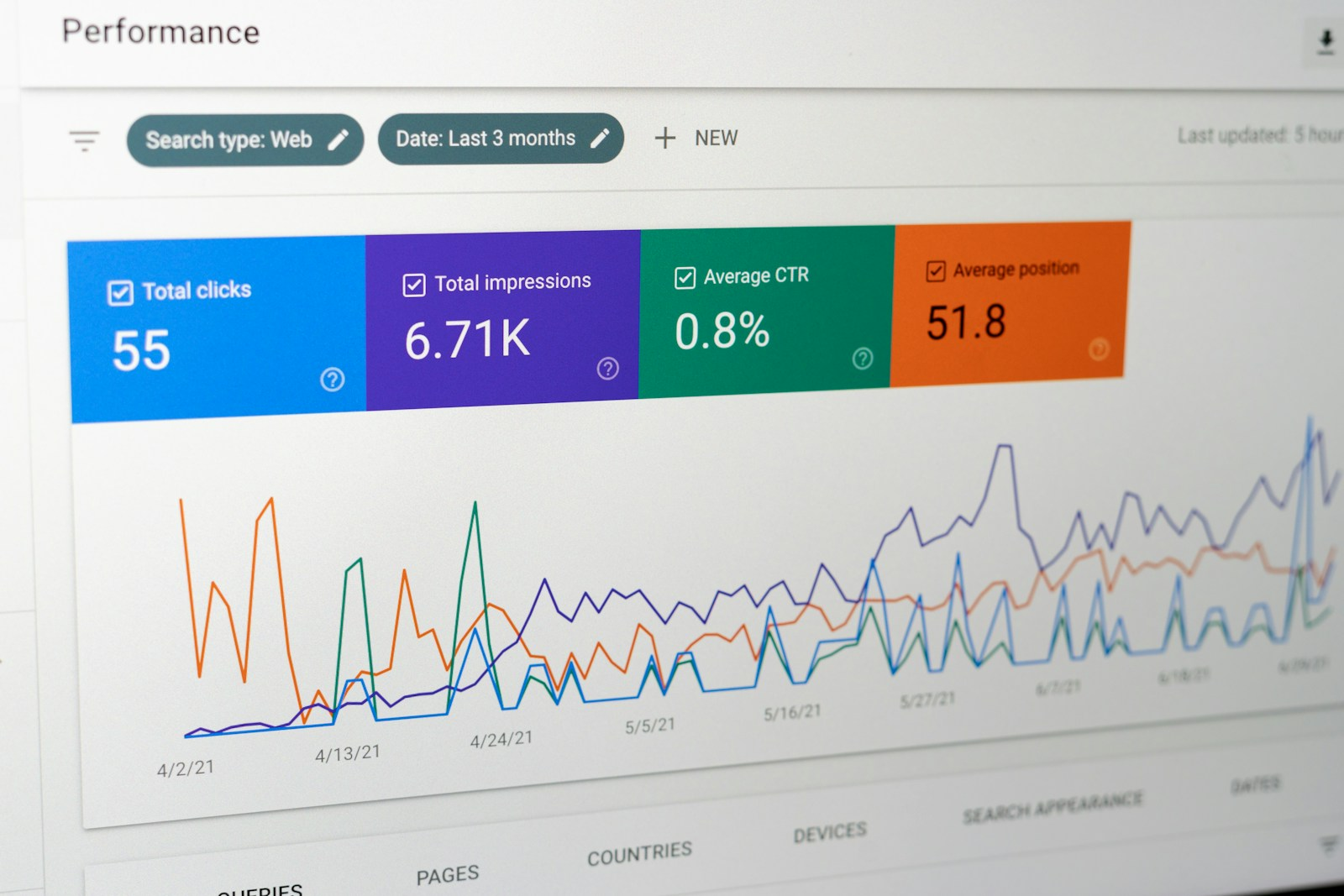
The Performance report provides information about clicks, impressions, click-through rate and average position, with the ability to analyse performance by queries, pages, countries, devices and search appearances.
This makes Search Console particularly useful when investigating ranking volatility. Instead of simply asking whether rankings have fallen, SEOs can ask whether impressions have changed, whether clicks have changed, whether the decline is concentrated on particular pages and whether specific queries are responsible.
Average position should be interpreted carefully. Google recommends not focusing too heavily on absolute position because it is an aggregated metric. Impressions and clicks provide a more meaningful indication of whether a ranking change is affecting actual search visibility and traffic.
Search Console has also become more useful for recent monitoring. Its 24-hour performance view provides more recent data for clicks, impressions, CTR and average position, helping SEOs identify emerging changes without relying exclusively on older reporting windows.
Monitoring Impressions, Clicks and CTR
Ranking position is only one part of SEO performance.
Impressions indicate how frequently a website appears in search results, while clicks show how often users visit the site from those results. CTR measures the relationship between impressions and clicks.
These metrics can help explain why ranking volatility matters.
If rankings decline and impressions also decline, there may be a genuine loss of search visibility. If impressions remain stable but clicks fall, the issue could instead involve SERP presentation, changing search intent, competing features or the attractiveness of the page title and description.
Google recommends examining these patterns when investigating search traffic drops. Its guidance also suggests comparing longer time periods and looking for patterns across affected pages and queries rather than reacting to a single metric.
For SEO teams, this creates a more reliable monitoring framework: ranking data identifies movement, while impressions, clicks and CTR help determine its business significance.
Track Ranking Volatility Across Keyword Groups
Tracking individual keywords is useful, but keyword groups can provide much more valuable information.
SEOs can group keywords by topic, search intent, product category, landing page, location or commercial importance. If dozens of keywords connected to the same topic decline simultaneously, the pattern is more significant than one isolated keyword falling three positions.
Keyword segmentation can also reveal whether volatility is affecting informational searches, commercial searches or transactional queries differently.
For example, an ecommerce site might find that product-related keywords remain stable while informational queries experience significant volatility. A B2B technology company might see changes concentrated around comparison and software-review queries.
Segmenting keywords therefore makes it easier to identify patterns that could otherwise be hidden inside a large ranking dataset.
Monitor Desktop and Mobile Rankings Separately
Search performance can vary significantly between devices, making device-level monitoring important for modern SEO.
Mobile users interact with search results differently from desktop users, and mobile SERPs can contain different layouts, features and competitive environments. A ranking change that appears insignificant when aggregated across all devices could become much more important when viewed specifically on mobile.
Rank tracking platforms allow SEOs to monitor device-specific positions and compare changes over time. Semrush Position Tracking, for example, supports tracking across desktop, mobile and tablet as well as multiple geographic locations.
For businesses where mobile traffic represents a substantial proportion of organic visits, mobile ranking volatility should be treated as a separate monitoring signal rather than simply another filter.
Geographic Ranking Volatility
Location is another important source of ranking variation.
A website can rank highly in one country, city or region while appearing considerably lower elsewhere. This is particularly important for local SEO, international websites and businesses operating across multiple markets.
Tracking rankings from a single location can therefore produce a misleading picture of overall search performance.
Modern rank tracking tools enable SEOs to monitor rankings across specific countries and, in some cases, cities or postal-code-level locations. Semrush Position Tracking, for example, supports location-specific tracking and competitor comparisons.
For international SEO teams, geographic segmentation can help identify whether volatility represents a global change or a market-specific shift.
Search Ranking Volatility Tools
Dedicated rank tracking tools provide the historical data and monitoring capabilities required to identify meaningful changes.
Semrush Position Tracking monitors keyword positions over time and provides visibility across locations, devices and competitors. Its reporting includes average position, ranking distribution, visibility and SERP features.
Semrush Sensor is specifically designed to monitor wider SERP volatility. It tracks daily changes across a fixed set of keywords and provides volatility scores that indicate how much the search results have changed. Its system uses a 0–10 scale, with higher scores representing greater volatility.
This distinction is valuable. A rank tracker primarily answers the question, “What happened to my website?” A SERP volatility tool helps answer, “Is something happening across search results more broadly?”
Combining both provides much stronger diagnostic information.
Google Search Status and Algorithm Updates
When ranking volatility increases significantly, SEOs should check whether Google has reported an algorithm update or wider Search issue.
Google’s Search Status Dashboard provides information about significant Search system issues and ranking updates that may affect website performance.
Google also maintains documentation describing core updates and ranking systems. Several broad core updates occur each year, while Google also makes smaller ongoing improvements to its systems.
This means SEO professionals should avoid assuming that every ranking decline is caused by a major named update. Search can change continuously.
The most useful approach is to compare the timing of ranking movements with broader volatility data, Google announcements, competitor changes and the site’s own technical and content history.
Monitoring Competitor Rankings
Competitor monitoring is essential when analysing search ranking volatility.
A decline in your ranking does not necessarily mean your page has become worse. Another website may simply have improved.
Tracking competitor movement can reveal whether multiple competitors gained positions at the same time, whether a new domain entered the SERP or whether one competitor has consistently increased visibility.
Dedicated rank trackers can provide side-by-side competitor comparisons. Semrush Position Tracking, for example, allows competitors to be added to campaigns and monitored alongside a site’s own rankings.
Competitor analysis is particularly useful following a significant ranking decline because it can reveal what changed in the competitive landscape.
Monitor SERP Features, Not Just Blue Links
Traditional keyword rankings provide an incomplete picture of modern search visibility.
Search results can include featured snippets, video carousels, image results, local packs, shopping results, AI Overviews and other search features. These can alter the amount of attention available to traditional organic listings.
A page can technically retain position four while receiving fewer clicks because the SERP has become more visually competitive.
This is why modern rank tracking should monitor SERP features alongside traditional rankings. Semrush’s Position Tracking, for example, reports SERP features and visibility changes alongside keyword positions.
For SEOs, the key question is increasingly not simply “What position do we rank in?” but “How visible are we within the complete search experience?”
Watch for Ranking Volatility Around Major Website Changes
SEO teams should maintain a record of significant website changes.
Content updates, URL changes, internal linking modifications, migrations, technical fixes, template changes and large-scale publishing projects can all affect rankings.
Adding annotations to ranking reports makes it easier to connect a ranking movement with a specific SEO action. A ranking decline that begins immediately after a site migration should be investigated differently from a decline that occurs across the industry during a Google update.
Google also notes that URL changes and site migrations can result in temporary ranking fluctuations while pages are recrawled and reindexed.
Maintaining a change log therefore turns ranking data into a more useful historical record.
Technical SEO and Ranking Volatility
Technical SEO problems can sometimes create ranking fluctuations that resemble algorithmic volatility.
Indexing issues, accidental noindex directives, robots.txt changes, canonical problems, server errors, broken redirects, JavaScript rendering problems and site migrations can all affect organic visibility.
If rankings fall suddenly across many pages, technical diagnostics should be performed before assuming the cause is an algorithm update.
Google Search Console provides several tools that can help identify these problems, including indexing information and URL inspection capabilities.
The most effective SEO monitoring strategy therefore combines ranking data with technical health data.
Seasonality and Search Demand
Not every traffic decline is an SEO decline.
Search behaviour changes throughout the year. Seasonal demand, economic conditions, news events, product launches and changing consumer interests can all affect search volume.
Google recommends using Google Trends alongside Search Console when investigating traffic declines to determine whether interest in a query has fallen across the wider market.
This distinction is particularly important for publishers and ecommerce businesses. A decline in impressions may reflect reduced search demand rather than lower rankings.
SEO professionals should therefore compare ranking position with impressions before deciding that a visibility problem exists.
How SEOs Should Respond to Ranking Volatility
The biggest mistake is reacting too quickly.
When rankings change, the first step should be observation. Determine the scale of the movement, the affected keywords, the affected pages, the duration of the change and whether competitors have experienced similar movements.
The next step is diagnosis. Compare Search Console data with rank tracking information, SERP volatility, Google update announcements, technical changes, competitor activity and search demand.
Only after the evidence points towards a genuine issue should substantial optimisation work begin.
Google specifically advises against quick-fix changes following ranking declines. Sustainable improvements to content, usability and overall site quality are more appropriate than repeatedly changing pages in response to temporary volatility.
Building a Search Ranking Volatility Dashboard
SEO teams can bring their monitoring data together into a central dashboard.
A useful dashboard can combine Google Search Console clicks, impressions, CTR and average position with ranking-tracker visibility, keyword groups, competitor rankings and SERP volatility.
Google supports connecting Search Console and Google Analytics data through Looker Studio, enabling SEO teams to visualise search performance alongside broader website activity.
The dashboard should highlight meaningful changes rather than overwhelm users with every keyword movement.
For example, an SEO manager might monitor overall organic visibility, percentage of keywords in the top three and top ten, major ranking losses, major ranking gains, traffic from priority landing pages, SERP feature visibility and wider volatility indicators.
This turns rank tracking from a reporting exercise into an early-warning system.
Search Ranking Volatility and SEO Skills
The growth of search ranking volatility makes data interpretation an increasingly valuable SEO skill.
Modern SEOs need to understand keyword tracking, Search Console, analytics, competitor analysis, technical SEO and search intent. They also need to interpret trends rather than simply report rankings.
This shift is particularly important as search becomes more complex. Traditional organic listings now exist alongside AI-powered search experiences, multimodal search and increasingly dynamic SERPs.
Google’s September 2026 Search Console update, for example, introduced reporting for web multimodal search, including searches involving Google Lens, Circle to Search and uploaded images.
The implication is clear: SEO monitoring is expanding beyond conventional keyword positions.
Recommended Online Courses to Build SEO Ranking Skills in 2026
As search engines become more dynamic, SEO professionals benefit from practical training in technical SEO, keyword research, analytics, search performance and optimisation. The following courses provide relevant training for learners who want to strengthen their SEO capabilities and develop practical skills for monitoring and improving search visibility in 2026.
SEO Training Masterclass 2026: SEO for WordPress Websites — Udemy
Platform: Udemy
Level: Beginner to Intermediate
Focus: SEO strategy, keyword research, on-page SEO, technical SEO, WordPress optimisation and search visibility
This type of practical SEO training is useful for learners who want to understand how ranking factors translate into website optimisation. The course is particularly relevant to website owners, marketers and aspiring SEO specialists who need practical experience with improving organic search performance.
Course Link: SEO Training Masterclass 2026: SEO for WordPress Websites — Udemy
SEO Specialization — Coursera
Platform: Coursera
Level: Beginner to Intermediate
Focus: Search engine optimisation, keyword research, on-page optimisation, technical SEO, competitive analysis and SEO strategy
Coursera’s SEO training pathway is useful for learners looking for a structured introduction to search optimisation. It provides a broader understanding of how SEO campaigns are planned, implemented and measured, helping learners develop skills that can be applied to ranking analysis and organic growth.
Course Link: SEO Specialization — Coursera
SEO Foundations — LinkedIn Learning
Platform: LinkedIn Learning
Level: Beginner
Focus: SEO fundamentals, keyword research, search visibility, content optimisation and SEO measurement
SEO Foundations provides a practical starting point for learners who need to understand the terminology and processes behind modern search engine optimisation. It can help beginners develop a foundation before progressing into more advanced areas such as technical SEO, rank tracking and search analytics.
Course Link: SEO Foundations — LinkedIn Learning
The Future of Search Ranking Monitoring
Search ranking monitoring is moving towards a broader model of search visibility measurement.
Traditional keyword positions will remain important, but they are increasingly being supplemented by SERP features, AI-powered search experiences, multimodal search, competitor visibility and user engagement signals.
The most effective SEO professionals will therefore combine multiple data sources instead of relying on a single ranking metric.
Automation will also make monitoring more proactive. Alerts can identify unusual volatility, sudden ranking declines and changes in competitor visibility before an SEO team notices them through manual reporting.
AI can further assist by identifying patterns across large keyword datasets, grouping related movements and highlighting pages that require investigation. However, human analysis remains important because ranking changes require context.
A sudden decline across thousands of keywords might represent an algorithm update, technical failure or change in search demand. The data can identify the pattern, but experienced SEO analysis is needed to determine the likely cause and appropriate response.
Final Thoughts
Search ranking volatility is a normal part of modern SEO, but significant and sustained changes deserve careful investigation. Rather than reacting to every movement, SEO professionals should examine ranking trends alongside impressions, clicks, CTR, competitors, SERP features, technical changes, search demand and broader volatility signals. Google Search Console provides essential first-party performance data, while dedicated rank trackers and SERP volatility tools can add greater frequency, segmentation and competitive context.
In 2026, successful SEO monitoring is increasingly about understanding the complete search environment rather than obsessing over a single keyword position. By tracking trends across pages, keyword groups, devices, locations and SERP features, businesses can identify genuine ranking problems while avoiding unnecessary reactions to temporary fluctuations. For SEO professionals, developing these analytical skills provides a stronger foundation for making informed optimisation decisions in an increasingly dynamic search landscape.