

Intro
The future of 3D printing in 2026 is being reshaped by the rapid integration of artificial intelligence, creating a new era of intelligent, automated, and highly efficient manufacturing. What was once primarily a prototyping technology has evolved into a core production method used across aerospace, healthcare, automotive, construction, and consumer goods industries. AI-driven systems are now capable of generating optimised 3D designs from simple text prompts, analysing structural performance before printing begins, and continuously adjusting printing parameters in real time to improve accuracy, reduce waste, and enhance material efficiency. This convergence of AI and additive manufacturing is accelerating innovation at a pace that is fundamentally redefining how physical products are designed, developed, and produced on a global scale.
At the same time, this technological transformation is reshaping the skills required for future careers in engineering, design, and digital manufacturing. Traditional manual CAD modelling and isolated technical expertise are increasingly being supplemented—and in some cases replaced—by AI-assisted design workflows, computational creativity, and data-driven production systems. As industries shift toward decentralised, automated, and sustainable manufacturing models, the ability to work alongside intelligent systems is becoming essential. For young learners and students entering STEM education pathways, this evolution highlights the importance of developing AI literacy, digital design skills, and computational thinking early, ensuring they are prepared for a future where human creativity and machine intelligence work in close collaboration.
Lets Dive In
How Artificial Intelligence is Transforming 3D Printing in 2026
Artificial intelligence is fundamentally changing how 3D printing systems operate at every stage of production. One of the most significant developments is the rise of generative design, where AI algorithms create highly optimised 3D models based on performance requirements rather than manual human drafting. Instead of designing every curve and structure, engineers now define constraints such as weight, strength, and material usage, and AI generates thousands of potential solutions in seconds.
This shift has dramatically reduced the barrier to entry for design and engineering. Natural language processing systems now allow users to describe objects in plain language, which are then converted into fully functional 3D printable models. This has opened up opportunities for students, hobbyists, and professionals who may not have advanced CAD expertise but still want to engage in product design and manufacturing innovation.
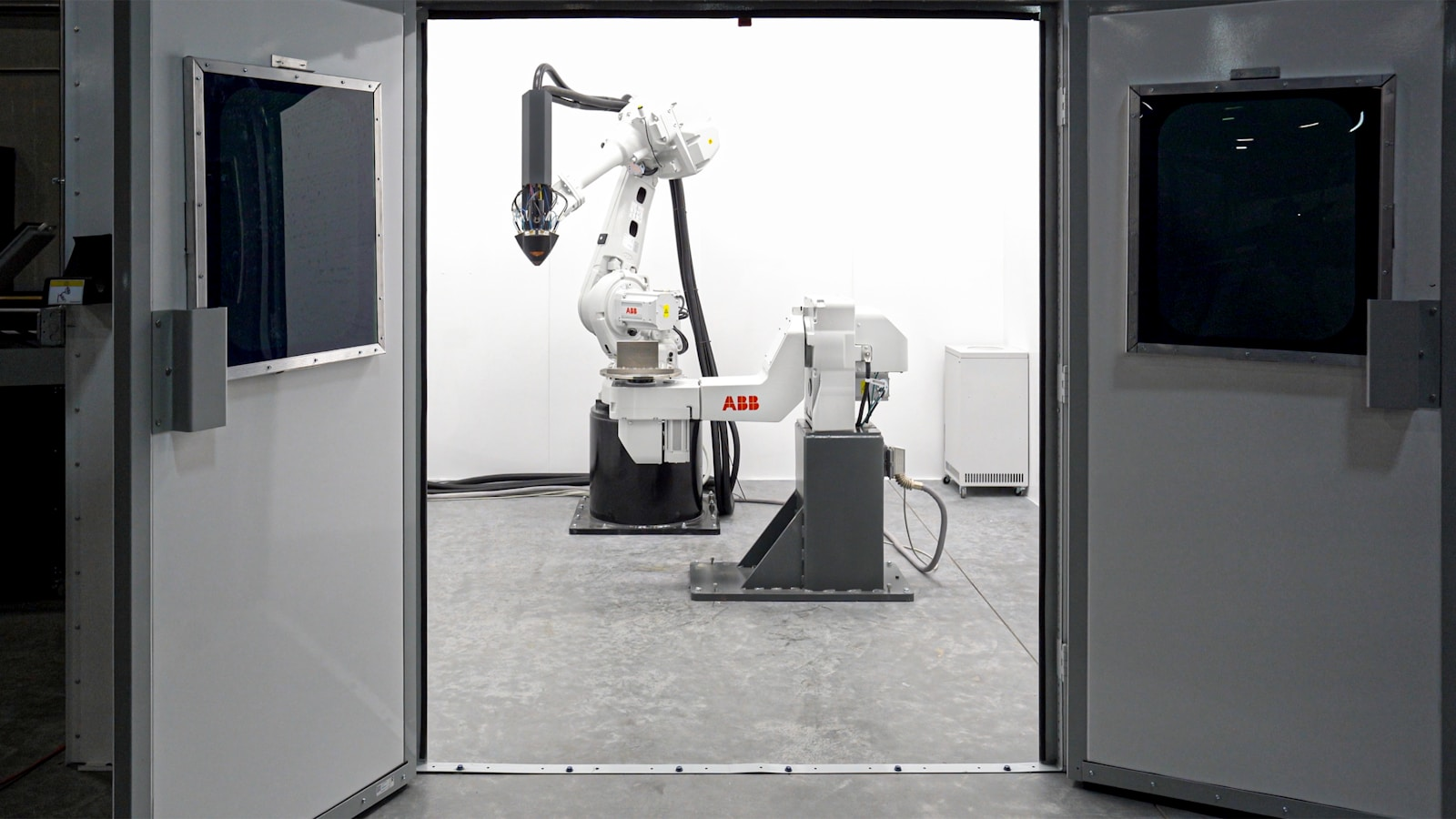
AI is also transforming the operational side of 3D printing. Modern systems are equipped with machine learning models that analyse temperature, material flow, vibration patterns, and layer alignment during printing. These systems continuously adjust parameters in real time to improve accuracy and reduce waste. In many advanced manufacturing environments, printers are now capable of self-correction, identifying potential errors such as warping or misalignment and automatically adjusting the print process to compensate.
Another key advancement is predictive maintenance. AI systems can analyse historical performance data to predict when a printer component is likely to fail. This reduces downtime, improves efficiency, and lowers operational costs. In large-scale manufacturing environments, this capability is essential for maintaining continuous production without interruption.
The Evolution of Additive Manufacturing into an Intelligent Production Ecosystem
The integration of AI into 3D printing has transformed additive manufacturing from a manual process into an intelligent production ecosystem. In earlier stages of development, 3D printing was primarily used for prototyping and small-scale production. However, in 2026, it is increasingly being used for full-scale industrial manufacturing.
Industries such as aerospace are using AI-driven 3D printing to produce lightweight components that improve fuel efficiency and performance. In healthcare, personalised implants and prosthetics are being designed using patient-specific data, enabling highly customised medical solutions that were previously impossible to manufacture efficiently. In automotive engineering, manufacturers are using additive manufacturing to produce complex parts with reduced material waste and faster production cycles.
One of the most important developments in this evolution is the shift toward decentralised manufacturing. Instead of relying on large centralised factories, companies are increasingly producing goods closer to where they are needed. AI systems coordinate these distributed production networks, ensuring consistency, quality control, and supply chain efficiency across multiple locations.
Sustainability is also becoming a major driver of innovation. AI-optimised printing processes reduce material waste, while new biodegradable and recyclable printing materials are being developed to minimise environmental impact. As industries face increasing pressure to reduce carbon emissions, AI-driven 3D printing offers a more sustainable alternative to traditional manufacturing methods.
How the Industry Workforce can Prepare for the Future of 3D Printing and AI
As the manufacturing industry becomes more automated and digitally driven, the skills required for future success are shifting significantly. For children and young learners, early exposure to digital creativity and computational thinking is becoming increasingly important.
One of the most valuable areas of early development is digital design literacy. This includes understanding how physical objects are created using software tools, how digital models translate into real-world objects, and how design constraints affect performance. Even simple activities such as creating basic 3D shapes or exploring interactive design tools can build foundational knowledge that becomes highly relevant later in education.
Coding and computational thinking are also essential skills for the future. While not every child will become a software engineer, understanding how logic, algorithms, and automation systems work will be crucial in a world where AI plays a central role in manufacturing. Learning how to think in structured, logical steps helps children understand how intelligent systems operate and how they can be guided or improved.
Creativity remains equally important. In fact, creativity is becoming more valuable in the age of AI, not less. As machines take over repetitive and technical tasks, human value increasingly lies in imagination, innovation, and problem-solving. Children who develop strong creative thinking skills will be better equipped to use AI tools effectively rather than being replaced by them.
Hands-on learning is another critical factor. Exposure to physical making through tools such as entry-level 3D printers or digital fabrication kits helps bridge the gap between virtual design and real-world production. This practical experience builds intuition about materials, structure, and engineering principles that cannot be fully learned through theory alone.
Future Skills Required in an AI-Driven 3D Printing Economy
The workforce of the future will require a blend of technical, creative, and analytical skills. One of the most important emerging skill sets is AI-assisted design thinking. Rather than manually constructing every model, professionals will need to understand how to guide AI systems to produce optimal designs based on performance criteria and constraints.
Computational creativity is another key skill area. This involves using digital tools, generative algorithms, and simulation software to create innovative solutions that would be difficult or impossible to design manually. It represents a fusion of artistic creativity and technical engineering knowledge.
Data interpretation is becoming increasingly important as well. Modern 3D printing systems generate large amounts of sensor data during production. Understanding how to interpret this data allows engineers and designers to optimise performance, reduce errors, and improve efficiency. This includes knowledge of temperature control, material flow dynamics, and structural integrity analysis.
Material science knowledge will also remain essential. Despite advances in AI, human understanding of materials such as polymers, metals, ceramics, and composites is still required to select appropriate inputs for different applications. As new advanced materials are developed, professionals who can evaluate and apply them effectively will be in high demand.
Automation design and system thinking are also becoming core competencies. Instead of operating machines manually, future professionals will design automated workflows that allow machines to operate independently with minimal human intervention. This includes integrating AI systems, robotics, and digital manufacturing platforms into cohesive production environments.
Coursera AI and 3D Printing Learning Pathways for Future Skills Development
One of the most accessible platforms for developing future-ready skills in AI and 3D printing is Coursera, which offers a wide range of courses designed by leading universities and industry experts. The AI for Everyone course provides a strong foundation in understanding how artificial intelligence works and how it can be applied across industries, including manufacturing and product design. It is particularly valuable for beginners who want to develop AI literacy without requiring a technical background.
Another highly relevant learning pathway is the Machine Learning Specialization by Stanford University offered through Coursera. This programme provides deeper insight into how machine learning models are built and trained, which is essential for understanding how AI systems optimise 3D printing processes, predict failures, and improve design outcomes. It builds a strong technical foundation for those interested in advanced engineering or data-driven manufacturing roles.
These courses are increasingly important in 2026 because AI is no longer a separate discipline. It is integrated into nearly every aspect of digital production, including additive manufacturing, robotics, and industrial design. Learners who understand AI principles will be better positioned to adapt to future technologies.
Udemy and Practical 3D Printing Mastery for Hands-On Learning
Udemy remains one of the most practical platforms for learning hands-on 3D printing skills. The Learn 3D Printing – Beginner to Advanced course provides a structured introduction to additive manufacturing, covering everything from core 3D printing principles and printer setup to CAD fundamentals and real-world production workflows.
This type of practical training is particularly valuable for learners who want to understand how digital models become physical objects. It helps bridge the gap between theory and application, allowing students to experiment with real tools and materials. In a future where AI automates many design processes, understanding the physical limitations and possibilities of manufacturing will remain a critical advantage.
The course also introduces essential concepts such as slicing software, material selection, calibration, and print optimisation, which are still necessary even in AI-assisted environments. While AI may generate designs automatically, human oversight remains important to ensure quality, safety, and functionality.
edX and Advanced Computational Design for Engineering Innovation
The edX platform, in collaboration with leading institutions such as the Massachusetts Institute of Technology (MIT), offers advanced learning opportunities in manufacturing systems and engineering optimisation. A key course in this space is MITx – Manufacturing Process Control I, which focuses on the principles of statistical process control, variability reduction, and the optimisation of manufacturing performance in complex production environments.
Computational design is becoming a cornerstone of modern engineering because it enables the development of adaptive, data-driven systems that respond dynamically to changes in performance conditions, material behaviour, and production constraints. In the context of AI-driven 3D printing, this means moving beyond static modelling approaches toward intelligent systems that continuously refine outputs based on real-time feedback, predictive analytics, and process control logic.
Learners who develop expertise in this area gain a deeper understanding of how engineering systems are structured, monitored, and improved at scale. This knowledge is especially valuable for high-growth industries such as aerospace engineering, automotive manufacturing, robotics, and advanced product development, where AI-integrated manufacturing and additive production technologies are becoming standard practice in 2026 and beyond.
LinkedIn Learning and Industry-Ready Product Design Skills
LinkedIn Learning provides professional development courses focused on tools such as Fusion 360, which is widely used in product design and manufacturing industries. The Fusion 360 Essential Training course helps learners build practical skills in CAD modelling, simulation, and digital prototyping.
Understanding product lifecycle design, manufacturing constraints, and digital prototyping workflows helps learners prepare for real-world industry environments. These skills are particularly valuable for those aiming to enter engineering, industrial design, or manufacturing roles.
Future Career Paths in AI and 3D Printing Industries
The future career landscape in AI and 3D printing is rapidly evolving into a set of highly specialised hybrid roles that combine engineering, software development, data science, and advanced manufacturing knowledge. As artificial intelligence becomes deeply embedded in additive manufacturing systems, traditional job roles focused purely on machine operation or manual CAD design are being replaced by positions that require the ability to design, manage, and optimise intelligent production ecosystems.
Careers such as AI manufacturing engineer, generative design specialist, and digital fabrication engineer are emerging as central roles in this new industrial structure. These professionals are responsible for working with AI systems that automatically generate and refine 3D models, ensuring that outputs meet structural, material, and functional requirements while also aligning with cost efficiency and sustainability goals. Rather than manually building every component, these roles focus on guiding AI tools, validating outputs, and improving automated workflows across distributed manufacturing environments.
At a more advanced level, new specialist roles are forming around the intersection of simulation, materials science, and autonomous production systems. Digital fabrication technicians and robotics integration specialists will be tasked with overseeing fleets of interconnected 3D printers operating in smart factories, where production is largely automated but still requires human oversight for optimisation and quality assurance. Materials simulation analysts will use AI-driven modelling tools to predict how new composites, bio-materials, and lightweight alloys behave under different conditions, directly influencing product design decisions before physical production begins.
In parallel, roles in industrial AI systems architecture will grow in importance, focusing on building the underlying infrastructure that connects generative design platforms, real-time sensor networks, and cloud-based manufacturing systems. Together, these career paths reflect a broader shift in which the most valuable professionals are not just makers of physical objects, but architects of intelligent manufacturing ecosystems that continuously learn, adapt, and improve.
Final Thoughts
The convergence of artificial intelligence and 3D printing in 2026 represents far more than a technological upgrade; it marks a structural shift in how the world designs, produces, and distributes physical goods. Manufacturing is moving away from traditional linear processes and toward intelligent, adaptive systems where AI plays an active role in every stage of production, from initial concept generation to final quality control. This transformation is making production faster, more localised, and significantly more sustainable, while also lowering barriers to innovation. As generative design tools, real-time monitoring systems, and predictive analytics become standard within additive manufacturing, industries are increasingly relying on AI not just as a support tool but as a core decision-making layer within the production lifecycle.
For individuals, especially young learners preparing to enter this evolving landscape, the implications are profound. Success in the future workforce will depend less on memorising traditional technical processes and more on the ability to think creatively, understand digital systems, and collaborate effectively with AI-driven tools. Skills such as computational thinking, AI literacy, digital design proficiency, and systems-level problem solving will become essential foundations for careers in engineering, product design, and manufacturing technology. Ultimately, the future of 3D printing is not simply about machines producing objects more efficiently; it is about the emergence of a new creative partnership between humans and intelligent systems. Those who learn how to navigate, guide, and innovate within this partnership will be best positioned to shape the next generation of industrial development and global technological progress.