

Intro
A career in 3D modeling can provide opportunities across some of the world’s most innovative creative, technological and commercial industries. From video games and film production to animation, architecture, product design, advertising, engineering, virtual reality and 3D printing, organisations increasingly use three-dimensional digital assets to visualise ideas, develop products and create immersive experiences. This has created opportunities for professionals who can transform concepts, drawings, photographs and real-world objects into accurate, detailed and visually compelling 3D models.
The pathway into a 3D modeling career is also more accessible than it once was. However, becoming employable requires considerably more than learning how to operate 3D software. Successful 3D artists need a combination of modelling fundamentals, topology, UV mapping, texturing, lighting, rendering, visual communication and problem-solving abilities. They also need to understand the requirements of their chosen industry and develop a professional portfolio that demonstrates their ability to produce high-quality work.
Lets Dive In
What Does a 3D Modeler Do?
A 3D modeler creates three-dimensional digital objects using specialist computer graphics software. Depending on their area of employment, they may create characters, creatures, vehicles, buildings, environments, furniture, machinery, consumer products, props or fictional worlds.
The process normally begins with a reference. A modeler may receive concept art, photographs, sketches, CAD drawings, technical specifications or real-world measurements. They then translate this information into a three-dimensional digital asset.
Professional 3D modeling involves considerably more than making an object look correct. A model may need clean topology so it can be animated, appropriate polygon density for real-time applications, accurate dimensions for manufacturing or carefully constructed surfaces for high-quality rendering.
This makes 3D modeling skills highly transferable. A character artist needs to understand anatomy and facial topology, while an architectural visualisation artist needs accurate dimensions and convincing materials. A game artist must consider polygon counts and real-time performance, while a CAD modeler may prioritise engineering accuracy.
Choosing a 3D Modeling Career Path
One of the most important decisions for someone pursuing a career in 3D modeling is deciding which part of the industry they want to enter. Although different disciplines share many foundational skills, professional requirements can vary significantly.
A character modeler specialises in people, creatures and other organic forms. These professionals need knowledge of anatomy, sculpting, facial structure, clothing, topology and texturing.
An environment artist creates buildings, landscapes, interiors, streets and complete digital environments. Environment artists typically require strong modelling, modular asset creation, texturing, lighting and real-time rendering abilities.
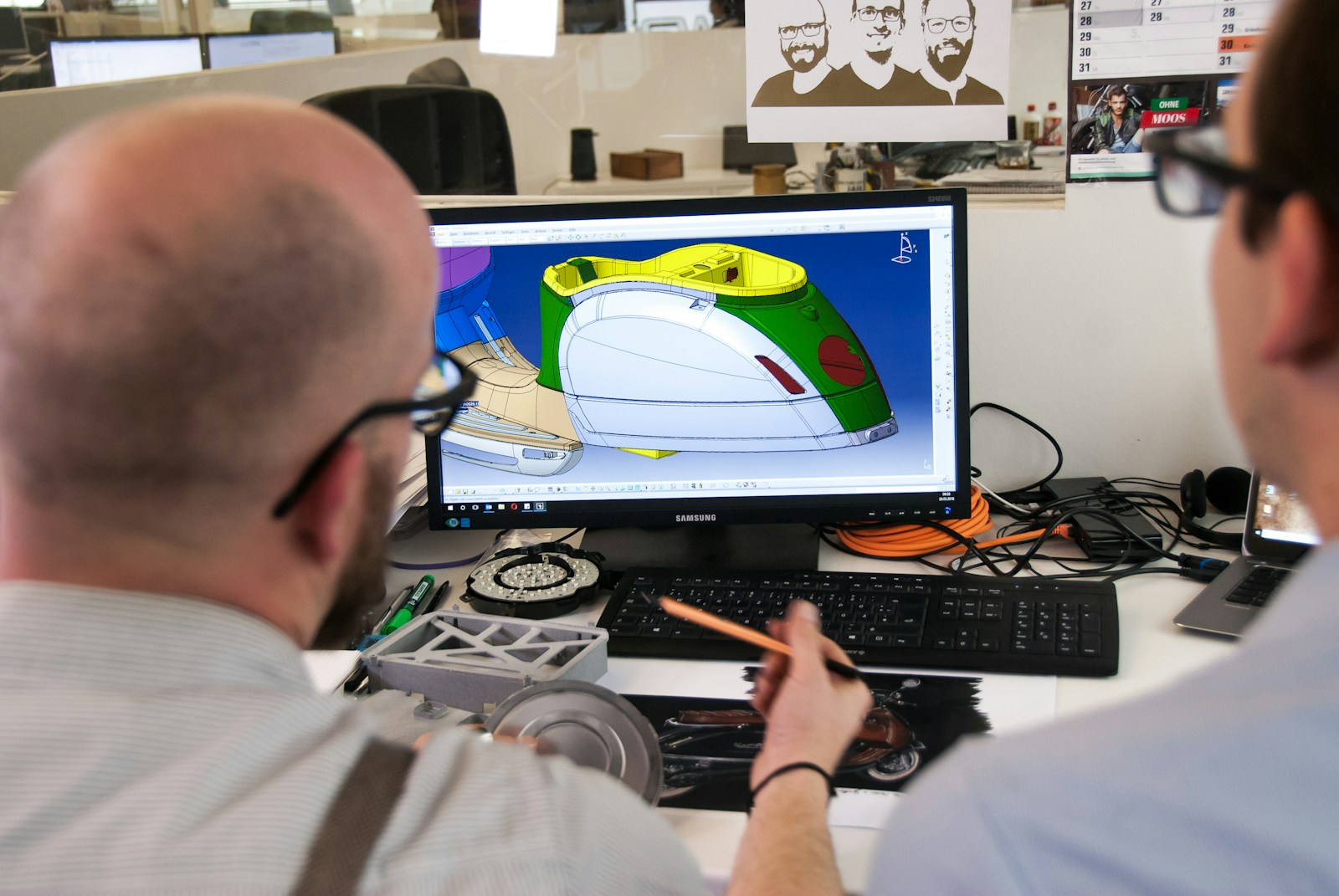
A hard-surface modeler concentrates on manufactured and mechanical objects such as vehicles, machinery, robots, consumer electronics and industrial equipment. Precision, topology, proportions and surface detail are particularly important.
An architectural visualisation artist creates digital representations of buildings, interiors and developments. Their work combines 3D modeling with architectural understanding, materials, lighting, cameras and photorealistic rendering.
A product visualisation artist creates realistic digital representations of products for advertising, marketing, ecommerce and product development. Accuracy, materials, studio lighting and rendering are particularly important.
A technical or CAD modeler works closer to engineering, manufacturing and industrial design. In this area, dimensions, tolerances and technical specifications may be more important than artistic interpretation.
There are also opportunities for 3D professionals in games, film, television, animation, advertising, virtual production, virtual reality, augmented reality and emerging immersive technologies.
Building the Foundations of 3D Modeling
The first stage of a successful 3D modeling career pathway is developing a strong understanding of three-dimensional design.
Beginners should become comfortable with 3D space, object transformations, vertices, edges, faces, polygons, modifiers, subdivision surfaces, symmetry and basic mesh construction.
Understanding the difference between organic and hard-surface modeling is also important. Organic modelling involves subjects with natural curves and complex surfaces, while hard-surface modelling focuses on manufactured objects with more defined edges and geometric forms.
At this stage, learners should focus on understanding why different modelling techniques are used rather than simply memorising software commands.
Developing spatial awareness is equally important. A professional modeler must be able to look at a reference and mentally understand its structure from multiple angles.
The objective during the early stages should be to create simple objects independently and gradually increase their complexity.
Developing Professional 3D Modeling Skills
Once the fundamentals have been established, aspiring professionals should begin developing production-quality modelling skills.
Topology becomes particularly important at this stage. Good topology creates predictable surfaces and makes models easier to animate, texture, modify and optimise. Modelers should understand edge loops, polygon flow, subdivision modelling and retopology.
Hard-surface modelling is another valuable skill because it applies across games, product design, architecture, visualisation and industrial applications. Artists should practise creating bevels, mechanical components, manufactured surfaces and detailed objects from photographic or technical references.
Organic modelling requires a different approach. Artists working with characters and creatures need to understand anatomy, proportions, muscles, facial structures and natural surface forms.
Reference-based modelling should become an increasingly important part of the learning process. Rather than simply following tutorials, aspiring modelers should attempt to recreate objects from photographs, drawings and real-world references.
This transition from tutorial exercises to independent projects is an important milestone in becoming job-ready.
Learning UV Mapping and Texturing
UV mapping and texturing are essential components of professional 3D asset creation.
UV mapping involves converting the surface of a three-dimensional object into a two-dimensional layout so that textures can be applied correctly. Poor UV mapping can produce stretching, visible seams and inconsistent texture resolution.
Professional modelers should understand UV islands, seams, texel density, texture resolution and UV packing. They should also understand the relationship between high-poly and low-poly models when creating assets for games and real-time applications.
Texturing adds the visual characteristics that make surfaces appear realistic. Artists need to understand colour, roughness, metallic properties, normal maps, ambient occlusion and surface imperfections.
These capabilities are particularly valuable in games, animation, VFX and product visualisation, where realistic surface detail can significantly influence the quality of the finished asset.
Developing Digital Sculpting Skills
Digital sculpting is particularly valuable for people pursuing character modelling, creature design and high-detail organic modelling.
Unlike traditional polygon modelling, sculpting allows artists to manipulate digital forms in a way that resembles working with clay. This makes it particularly effective for developing anatomy, facial features, clothing, wrinkles and other organic details.
ZBrush has become an important application within professional digital sculpting workflows, although similar capabilities are increasingly available within other 3D applications.
An aspiring character artist should develop an understanding of anatomy before becoming overly focused on software features. Software can provide the tools, but understanding human and creature forms is what allows the artist to create convincing characters.
Developing Lighting and Rendering Skills
A technically accurate model can still look unprofessional if it is presented poorly.
3D rendering converts a digital scene into a final image or animation, while lighting influences how viewers perceive shape, depth, materials and atmosphere.
Aspiring 3D artists should learn camera composition, studio lighting, environmental lighting, shadows, reflections, materials and rendering techniques.
Lighting is particularly important for portfolio development because the quality of a final presentation can have a major influence on how an employer perceives the underlying model.
Artists should therefore learn how to present their work professionally rather than simply relying on default software settings.
Adding Real-Time 3D and Game Development Skills
People interested in game development, real-time 3D, virtual reality and interactive environments should consider developing knowledge of a modern game engine.
Unreal Engine is particularly valuable because it enables artists to place 3D assets into interactive real-time environments.
This introduces additional requirements around asset optimisation, materials, lighting, collisions, level of detail and real-time performance.
A game-focused 3D artist should understand how models move between a digital content creation application and a game engine. They should also understand the difference between creating an asset for a still image and creating an asset that needs to function efficiently inside an interactive environment.
Knowledge of real-time rendering can therefore significantly broaden the career opportunities available to a 3D modeler.
Developing CAD and Technical Modeling Skills
Not every 3D modeling career is focused on entertainment and visual effects.
People interested in engineering, manufacturing, architecture and industrial design can pursue technical modelling careers.
CAD modelling focuses heavily on accuracy, dimensions and technical specifications. Professionals may create mechanical components, machinery, architectural structures, products and manufacturing designs.
This pathway requires strong spatial reasoning as well as an understanding of engineering or design principles.
Knowledge of CAD can be particularly valuable for professionals who want to combine digital modelling with product development, manufacturing or engineering.
Certifications for a 3D Modeling Career
Certifications can strengthen a 3D modeling CV, but they should not be regarded as a replacement for practical experience.
For many creative positions, portfolio quality is more important than the number of certifications a candidate possesses. Employers want to see evidence that an artist can create professional-quality assets and work effectively within a production workflow.
Autodesk provides several credentials that can be relevant to aspiring 3D professionals. Autodesk Certified User credentials are available for applications including Maya and 3ds Max and can provide external validation of foundational software knowledge.
More advanced Autodesk certifications can become useful as professionals gain experience and begin targeting specialist roles.
For creative 3D artists, certification is best viewed as a supporting credential. A strong portfolio combined with practical software skills is generally a more powerful combination than certification alone.
Building a Professional 3D Modeling Portfolio
The 3D modeling portfolio is one of the most important assets an aspiring professional can develop.
Rather than filling a portfolio with dozens of basic exercises, candidates should focus on producing a smaller collection of increasingly sophisticated projects.
A character artist could demonstrate anatomy, sculpting, retopology, UV mapping, texturing and final presentation. An environment artist could create an entire location containing buildings, props, materials, lighting and environmental details.
A hard-surface artist might create a detailed vehicle, robot or piece of machinery and demonstrate both the high-poly and production-ready versions.
Portfolio projects should ideally show the process as well as the final result. Wireframes, topology, UV layouts, texture maps and development stages can help employers understand the artist’s technical capabilities.
For game artists, showing assets inside a real-time engine can be particularly useful. For architectural visualisers, finished renders should demonstrate accurate modelling, materials, lighting and camera composition.
The portfolio should also be tailored to the intended career. Someone applying for character artist positions should not fill their portfolio with unrelated architectural models.
Essential Soft Skills for 3D Modelers
Technical ability represents only part of becoming a successful 3D professional.
Attention to detail is essential because small mistakes in proportions, topology, materials or textures can affect the finished asset.
Creative problem-solving is also important because modelers frequently have to determine how to construct an object from incomplete references.
Communication skills matter in professional production environments where artists work with art directors, designers, animators, engineers and other specialists.
Time management is particularly important when working under deadlines or handling multiple projects simultaneously.
Finally, adaptability and continuous learning are increasingly important. 3D software, rendering technologies, game engines and production techniques continue to evolve, meaning professionals need to keep developing their skills throughout their careers.
Recommended Online Courses to Build 3D Modeling Career Skills in 2026
As the employment landscape evolves, continuous learning is becoming increasingly important for professionals seeking successful careers in 3D modeling, 3D animation, game development, architectural visualization, digital sculpting, product visualization and technical 3D design. The following courses provide practical ways to develop the technical and creative skills required for a successful 3D modeling career in 2026.
Blender Essentials: 3D Modeling and Animation for Beginner | Udemy
Platform: Udemy
Level: Beginner
Focus: Blender, 3D modeling, animation, materials, UVs, lighting and rendering
This beginner-friendly course provides a broad introduction to Blender and the wider 3D production workflow. It is suitable for people starting from limited or no previous experience and provides a foundation across modeling, materials, UVs, lighting, environments, rendering and animation.
Course Link: View Blender Essentials on Udemy
Creating 3D Environments in Blender | Udemy
Platform: Udemy
Level: Beginner to Intermediate
Focus: Blender, environment modeling, Geometry Nodes, PBR materials, lighting and rendering
This popular Blender course focuses on creating detailed 3D environments and complete digital scenes. Students learn how to develop environments using modern Blender workflows, including procedural techniques, materials, lighting and rendering. It is particularly useful for aspiring environment artists and 3D artists who want to build more visually impressive portfolio projects.
Course Link: View Creating 3D Environments in Blender on Udemy
3D Modeling in Blender | Udemy
Platform: Udemy
Level: Beginner to Intermediate
Focus: Hard-surface modeling, topology, modifiers, Blender and 3D asset creation
This course provides focused training in Blender-based 3D modeling, with particular attention to creating clean and usable models. Students develop skills in hard-surface modeling, modifiers and topology while learning techniques that can be applied to games, visualization, animation and other digital production environments.
Course Link: View 3D Modeling in Blender on Udemy
Maya for Beginners: Complete Guide to 3D Animation in Maya | Udemy
Platform: Udemy
Level: Beginner
Focus: Autodesk Maya, 3D modeling, texturing, lighting, rigging, animation and dynamics
Autodesk Maya remains an important tool across professional animation, visual effects and game development pipelines. This beginner-focused course introduces students to Maya while covering modeling, texturing, lighting, rigging, animation and dynamics. It provides a useful foundation for aspiring 3D artists who want to work in professional entertainment and animation environments.
Course Link: View Maya for Beginners on Udemy
Sculpting in ZBrush – Ultimate Course for Beginners and Intermediate | Udemy
Platform: Udemy
Level: Beginner to Intermediate
Focus: ZBrush, digital sculpting, character creation, anatomy, detailing and Polypaint
Digital sculpting is an important skill for character artists, creature artists and other specialists working with highly detailed 3D models. This ZBrush course introduces the software’s sculpting tools and techniques, including DynaMesh, ZRemesher, Sculptris Pro, ZSpheres, Booleans and Polypaint. It can help students develop the skills needed to create detailed organic models for games, animation and visual effects.
Course Link: View Sculpting in ZBrush on Udemy
Unreal Engine 5 Megacourse: Create Games in UE5 & Blender | Udemy
Platform: Udemy
Level: Beginner to Intermediate
Focus: Unreal Engine 5, Blender, real-time 3D, game development, environments and interactive projects
Understanding real-time engines can significantly expand the career opportunities available to 3D artists. This project-based course combines Blender and Unreal Engine 5 to introduce students to game development and real-time 3D production. It provides practical experience creating assets and environments and integrating them into an interactive Unreal Engine workflow.
Course Link: View Unreal Engine 5 Megacourse on Udemy
The 3D Modeling Career Roadmap
Months One to Three
The first three months should focus on establishing fundamental 3D modelling skills. Beginners should learn their primary 3D application, understand three-dimensional space, practise mesh construction and become familiar with modifiers, materials, UVs and basic rendering.
The goal should be to complete several small independent projects.
By the end of month three, a learner should be capable of creating simple 3D objects without following a tutorial step by step.
Months Four to Six
Months four through six should focus on developing professional modelling techniques.
Topology, hard-surface modelling, subdivision modelling, UV mapping, materials and lighting should become major areas of practice.
Learners should increasingly work from references rather than copying tutorials. Projects should become more complex and should begin to resemble the type of work expected within the chosen industry.
By month six, aspiring professionals should also begin deciding whether they want to specialise in characters, environments, games, architecture, products, VFX or technical modelling.
Months Seven to Nine
Months seven through nine should be focused on specialisation.
Character artists should concentrate on anatomy, sculpting, retopology and character texturing. Environment artists should develop modular modelling, materials, scene composition and environmental storytelling.
Game artists should begin incorporating real-time workflows and asset optimisation. Architectural visualisers should concentrate on accurate modelling, materials, lighting and presentation.
This is also the stage when learners should begin producing their first serious portfolio pieces.
Months Ten to Twelve
Months ten through twelve should be dedicated heavily to portfolio development.
The objective should be to create approximately five to eight polished projects that demonstrate the candidate’s strongest skills.
Each project should be presented professionally and should ideally demonstrate the development process rather than simply displaying a final image.
At this point, aspiring professionals should also establish an online portfolio and begin networking with other artists and potential employers.
Months Twelve to Fifteen
Around the twelve-month mark, a highly motivated learner with consistent practical experience may be ready to begin entering the 3D modeling job market.
Applications can target junior 3D modeler positions, junior 3D artist roles, internships, freelance projects and entry-level game-art opportunities.
Candidates should not wait until they believe their portfolio is perfect. Applying for jobs provides valuable feedback about which skills employers are actually requesting.
However, applications should be targeted. A character artist should focus on character modelling and related positions rather than applying indiscriminately to every type of 3D job.
Months Fifteen to Eighteen
Between months fifteen and eighteen, aspiring professionals should refine their portfolios based on feedback from applications, interviews and industry contacts.
They can then expand their software knowledge or add complementary skills according to the requirements of their target industry.
For example, a game artist might add Unreal Engine, while a character artist could deepen their ZBrush and texturing capabilities. An architectural visualiser might add advanced rendering or CAD skills.
This creates a realistic 12-to-18-month roadmap for entering the 3D modeling job market for a committed beginner, although individual results will vary according to previous experience, study time, artistic ability and portfolio quality.
3D Modeling Job Opportunities
The range of potential 3D modeling jobs is extensive.
A Junior 3D Modeler generally works under the supervision of more experienced artists and creates assets according to established specifications.
A 3D Artist may combine modelling with texturing, lighting and rendering, while a Character Artist specialises in people and creatures.
Environment Artists create locations and worlds, while Hard-Surface Artists focus on manufactured and mechanical objects.
Prop Artists create objects used within games, films and environments, while Game Asset Artists create optimised assets designed for real-time engines.
Other potential careers include 3D Visualisation Artist, Architectural Visualiser, Product Visualisation Artist, VFX Modeler, Creature Artist, Technical Artist, CAD Modeler, 3D Printing Designer and Motion Graphics Artist.
The exact responsibilities vary significantly between companies, making it important for candidates to research individual job descriptions and align their portfolios with the skills employers request.
Final Thoughts
Building a successful 3D modeling career in 2026 requires a combination of technical ability, creativity, industry awareness and practical experience. The field extends far beyond traditional film and game production, with opportunities in architecture, product design, engineering, advertising, manufacturing, animation, visualisation, virtual reality and real-time 3D. The most effective career pathway begins with fundamental modelling principles before progressing into topology, UV mapping, texturing, lighting, rendering and a clearly defined specialisation.
The next step is to turn those skills into evidence of professional capability. A carefully constructed portfolio is more valuable than simply accumulating software knowledge or certifications, because employers need to see that candidates can actually create production-quality work. By following a structured 12-to-18-month 3D modeling career roadmap, completing progressively more sophisticated projects and targeting a specific area of the industry, aspiring professionals can move from beginner-level knowledge towards junior 3D modeling jobs, freelance opportunities and specialist career paths. With continued practice and professional development, 3D modeling can become the foundation for a long-term career spanning creative technology, entertainment, design, engineering and emerging digital industries.