

Intro
Social media has become one of the most important channels in modern digital marketing, but maintaining a consistent and engaging presence across multiple platforms is increasingly demanding. Brands are expected to publish regularly while producing content that is relevant, visually appealing, authentic and tailored to different audiences. Instagram, TikTok, YouTube, LinkedIn and Facebook all have different formats and audience expectations, meaning a single campaign can require numerous captions, graphics, videos and creative variations. For marketing teams, freelancers and small businesses, this growing content demand can quickly become difficult to manage.
Artificial intelligence is transforming this process. AI content generators can now help marketers develop captions, create images, generate video concepts, edit short-form videos, repurpose existing content and produce platform-specific variations. This is creating new opportunities for brands to scale social media content production more efficiently without necessarily increasing their marketing teams at the same rate. However, the greatest value of AI is not simply producing more content; it is combining automation with human creativity, brand strategy, audience insight and editorial judgment to create more effective social media campaigns.
Lets Dive In
What Are AI Content Generators?
AI content generators are software applications that use artificial intelligence to create, transform or optimize digital content. In social media marketing, these tools can generate written captions, social posts, headlines, scripts, images, graphics, animations and short-form videos.
Early AI marketing tools tended to focus primarily on text generation. A marketer could enter a topic and receive a suggested social media caption. Modern AI content generators are considerably more sophisticated. They can help develop campaign ideas, transform long-form content into social posts, generate visual concepts, create videos and adapt content for different platforms.
This evolution is particularly important for social media because content production is a high-volume activity. Brands often need to publish multiple times each week, while also responding to trends, seasonal opportunities and changing audience interests.
AI content generators can reduce the amount of manual work required to maintain this publishing cycle. Instead of creating every asset from scratch, marketers can use AI to develop initial concepts and variations that are then reviewed and refined by humans.
Why AI Social Media Marketing Is Growing
The growth of AI social media marketing is closely linked to the increasing pressure placed on marketing teams.
Organic social media reach is competitive, while audiences expect brands to provide frequent and engaging content. Short-form video has also become a major part of social media strategy, increasing the amount of editing and creative production required.
A single campaign might involve an Instagram carousel, TikTok video, YouTube Short, LinkedIn article, Facebook post and several supporting graphics. Each piece may need a different format and tone.
AI can help solve this content production challenge.
Research into AI social media tools shows that modern platforms increasingly support multiple stages of the marketing workflow, from content ideation and writing to visual creation, video production, repurposing and publishing.
This means the important development is not simply that AI can write a caption. Artificial intelligence is becoming integrated into the broader social media content creation process.
AI Caption Generators and Social Media Copywriting
AI caption generators are among the most accessible applications of artificial intelligence in social media marketing.
Writing social media captions can take considerable time, particularly when marketers need to produce multiple variations for different platforms. Captions need to capture attention quickly, communicate the central message and encourage engagement while maintaining the brand’s tone of voice.
AI can generate several potential captions within seconds.
A marketer can provide information about a product, campaign or target audience and ask an AI tool to produce different versions. These drafts can then be edited and refined before publication.
This makes AI particularly valuable during the creative brainstorming process. Instead of staring at a blank page, a social media manager can use AI-generated ideas as starting points for developing stronger content.
However, AI-generated captions still require human oversight. Generic language, repetitive phrasing and predictable marketing expressions can make content feel artificial. The strongest results occur when marketers provide detailed context and then apply their own creativity and editorial judgment.
AI Image Generation for Social Media
Visual content is central to social media marketing, and AI image generation is changing how brands approach graphic production.
AI-powered design tools can help marketers generate visual concepts, remove backgrounds, create layouts, resize graphics and develop variations for different platforms. Canva, for example, has incorporated AI-assisted design and video capabilities into its social media content creation ecosystem. (canva.com)
This can be particularly valuable for small businesses that do not have access to dedicated design teams.
Instead of requiring a designer to manually create every campaign variation, marketers can use AI to explore multiple concepts and then refine the strongest direction.
AI image generation can also make experimentation more affordable. A marketing team can test different visual styles, layouts and campaign concepts without requiring a completely new production process for each variation.
Nevertheless, AI-generated visuals still need to reflect established brand guidelines. Typography, colours, composition and visual identity remain important elements of professional social media marketing.
AI Video Generators and Short-Form Content
AI video generation may be one of the most significant developments in AI-powered social media marketing.
Platforms such as TikTok, Instagram and YouTube have made short-form video an increasingly important content format. Creating effective short videos traditionally requires filming, editing, captioning, resizing and publishing.
AI tools can accelerate many of these processes.
Modern video platforms can help identify interesting sections of long-form videos, generate short clips, add subtitles, reframe footage and create platform-specific versions. AI video tools can also assist marketers in developing scripts, storyboards and creative concepts.
This creates significant opportunities for content repurposing.
A podcast interview, webinar or product demonstration can become several short-form videos. A long-form video can provide multiple clips for TikTok, Instagram Reels and YouTube Shorts.
The result is a more efficient content production process in which businesses can obtain greater value from their existing content.
AI Content Repurposing
Content repurposing is becoming one of the most valuable applications of generative AI for social media marketing.
Businesses invest significant resources into creating original content. An article, podcast, webinar or video may contain dozens of useful ideas that can be adapted into shorter social media assets.
AI can accelerate this process.
A long-form article can be transformed into LinkedIn posts, social media captions, carousel concepts and video scripts. A podcast can become short-form clips and quote graphics. A webinar can become an entire series of educational social media posts.
This allows marketers to build content ecosystems rather than treating every social media post as a completely separate creative project.
The result can be greater consistency and improved efficiency.
Instead of constantly searching for new content ideas, marketing teams can use AI to extract additional value from original material they have already created.
Scaling Social Media Campaigns With AI
One of the strongest advantages of AI content generators is their ability to help brands scale social media campaigns.
A product launch can require a large number of creative assets. Traditionally, increasing campaign volume would require additional writers, designers and editors.
AI can reduce the amount of manual production required.
A marketing team can establish the campaign strategy and develop the core creative direction. AI can then help produce variations of captions, images, video scripts and platform-specific content.
This does not necessarily mean that marketers should publish everything AI produces.
The advantage is having more creative options.
AI can make it practical to explore multiple ideas before selecting the strongest concepts. This can improve experimentation while reducing production time.
For small businesses and freelancers, this can be especially valuable because AI tools can provide access to capabilities that previously required larger marketing teams.
AI and Brand Consistency
As businesses increase their content production, maintaining brand consistency becomes more challenging.
AI can assist by working from defined brand guidelines, preferred terminology, target audience information and examples of existing content.
Design platforms can help marketers maintain consistent colours, fonts and visual assets, while AI writing tools can generate content based on an established tone of voice.
Canva’s Brand Kit, for example, is designed to support consistent use of brand assets across content creation. (canva.com)
However, brand consistency should not result in repetitive content.
Effective social media marketing requires recognizable branding combined with variety. Human marketers remain essential for understanding how a brand should communicate in different situations.
Human Creativity Remains Essential
The growth of AI content generation does not make human creativity obsolete.
In fact, as AI-generated content becomes more widespread, originality may become even more valuable.
If every company can generate hundreds of captions, images and videos, audiences will have more difficulty distinguishing between brands. Generic AI-generated content can easily become background noise.
Human creativity provides the differentiation.
Marketers understand cultural context, customer emotions, brand history and strategic objectives in ways that AI cannot fully replicate.
AI can generate possibilities, but humans determine which ideas are worth developing.
AI can produce content variations, but humans decide which ones represent the brand.
AI can accelerate production, but humans determine what the audience actually needs.
This relationship between artificial intelligence and human creativity will be central to the future of social media marketing.
Avoiding Generic AI Content
One of the major risks associated with AI content generators is the production of generic material.
AI systems can produce polished captions that are grammatically correct but lack originality. Similar prompts can also produce similar results, creating repetitive content across different brands.
This creates a new challenge for digital marketers.
The objective should not be to produce the greatest possible amount of AI content. It should be to produce content that provides genuine value.
Effective AI social media marketing therefore requires strong prompts, detailed audience information, brand guidelines and human editing.
The marketer needs to provide context and direction.
AI becomes considerably more useful when it understands the purpose behind a campaign, the audience being addressed and the action the business wants the audience to take.
Platform-Specific Content Generation
Different social media platforms require different content strategies.
LinkedIn often rewards professional insight, expertise and industry commentary. Instagram is strongly visual. TikTok emphasizes short-form entertainment and discovery. YouTube supports longer-form video while also increasingly relying on Shorts.
AI can help marketers adapt a central campaign idea for each environment.
However, adaptation is different from duplication.
Publishing the same caption and image everywhere may save time, but it does not necessarily create effective social media marketing.
AI should instead help transform the core campaign message into platform-appropriate formats.
This can allow businesses to maintain a consistent campaign identity while adapting the creative execution to different audiences.
AI Social Media Automation
AI content generation is increasingly being combined with social media automation.
Marketing platforms are integrating AI into content planning, writing, scheduling and analytics, creating workflows that can handle several stages of social media management.
This can reduce the repetitive work involved in maintaining a content calendar.
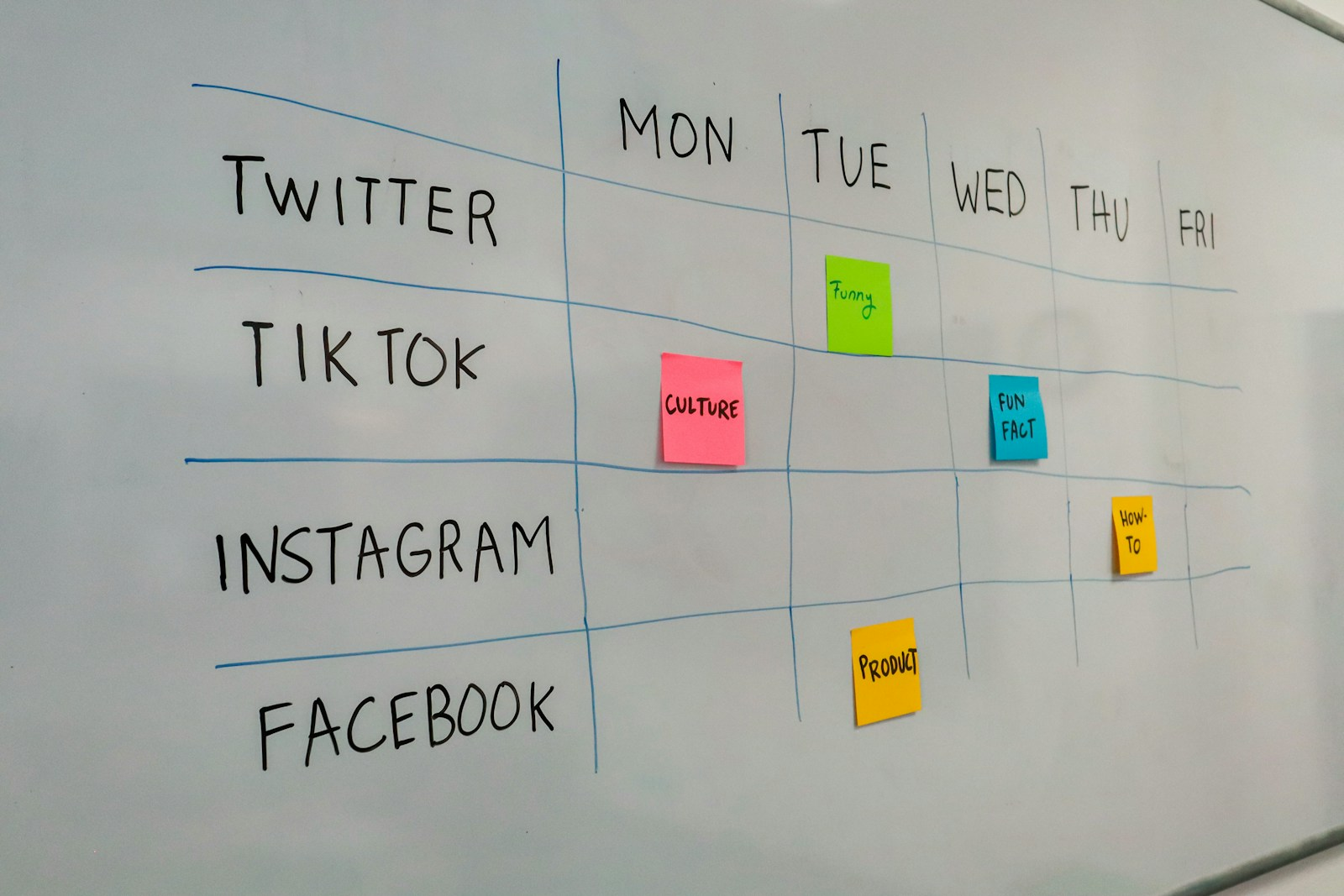
A marketer might use AI to generate initial ideas, create captions, produce variations, schedule posts and analyze performance. Human approval can remain part of the workflow before content is published.
This creates a hybrid model of social media automation.
The technology handles repetitive production tasks while marketers maintain strategic and editorial control.
For small marketing teams, this can significantly increase productivity.
AI-Powered Campaign Testing
AI also makes social media experimentation easier.
Producing multiple creative variations has traditionally been expensive because every variation requires additional design and copywriting work.
AI reduces this barrier.
Marketers can create different hooks, headlines, captions, images and video concepts and then test which versions generate the strongest engagement.
This supports a more data-driven approach to social media marketing.
Instead of relying entirely on assumptions about what audiences will prefer, businesses can use experimentation and analytics to identify effective creative patterns.
Over time, this can produce a feedback loop in which AI assists with content production while performance data informs future content strategies.
AI Social Media Analytics
The future of AI-powered social media marketing will increasingly connect content generation with analytics.
AI systems can analyze social media performance and help marketers identify patterns in engagement, content preferences and audience behaviour.
This can help answer questions about which topics are performing well, which formats are generating engagement and which campaign concepts deserve further investment.
Social media management platforms are increasingly integrating AI into content suggestions, social listening, analytics and optimization. Sprout Social, for example, describes AI applications across social intelligence, content recommendations, publishing and performance analysis.
This means AI will increasingly support both sides of the marketing process.
It can help marketers determine what to create and evaluate how that content performs.
Community Engagement Still Needs a Human Touch
Despite advances in AI automation, community engagement remains an area where human involvement is particularly important.
Social media is fundamentally about relationships.
Customers ask questions, share opinions, provide feedback and sometimes express frustration. Automated publishing cannot replace genuine interaction.
AI can assist marketers by identifying common questions, suggesting responses or organizing conversations. However, important customer interactions should still receive human attention.
This is particularly important for reputation management.
A poorly worded automated response can create significant damage if it is published without human review.
The future of social media marketing will therefore involve a combination of automated content production and human-led community engagement.
AI Content Generation and Marketing Productivity
The economic potential of AI content generators is closely connected to productivity.
Producing social media campaigns traditionally requires several specialist roles. Writers create captions, designers produce graphics and editors create videos. AI can assist across all of these activities.
This allows smaller teams to operate with greater creative capacity.
A freelancer may be able to manage more clients. A small business may be able to maintain a more consistent social presence. An agency may be able to produce more campaign variations without increasing production costs proportionally.
The opportunity is therefore not simply automation.
It is leverage.
AI gives marketers additional capacity, allowing them to spend more time on strategic activities that are difficult to automate.
The Importance of AI Content Strategy
Successful AI social media marketing requires more than access to an AI content generator.
Businesses need a clear content strategy.
They need to understand their target audience, brand positioning, campaign objectives and preferred channels before introducing AI into the production process.
The best workflow begins with strategy.
AI can then support brainstorming, content creation, visual development, video production and repurposing.
Human review should remain part of the process to ensure accuracy, originality, brand alignment and appropriate messaging.
Performance data can then be used to improve future campaigns.
This creates an integrated AI content strategy rather than disconnected use of individual AI tools.
Recommended Online Courses for Building AI-Powered Social Media Skills in 2026
As artificial intelligence becomes increasingly integrated into social media marketing, continuous learning is becoming essential for professionals who want to remain competitive in digital marketing. Generative AI, AI content generators, automated design, AI video generation, social media analytics, prompt engineering and marketing automation are transforming how brands create and distribute content.
Fortunately, online learning platforms provide accessible courses covering generative AI, social media marketing, digital marketing, content creation, analytics and AI-powered marketing. These courses enable social media managers, freelancers, content creators, digital marketers and business owners to develop the practical skills needed to combine AI productivity with effective social media strategy.
Generative AI for Digital Marketing Specialization | Coursera
Platform: Coursera
Level: Beginner to Intermediate
Focus: Generative AI, Digital Marketing, Prompt Engineering, AI Content Creation and Marketing Automation
The Generative AI for Digital Marketing Specialization from IBM provides a practical introduction to the growing relationship between artificial intelligence and digital marketing. The programme is particularly relevant to social media professionals because generative AI is increasingly being used to develop marketing content, automate repetitive tasks and improve campaign workflows.
The programme helps learners understand how generative AI can support content creation, marketing strategy, personalization and automation. These capabilities can be applied to social media captions, campaign concepts, content variations and marketing workflows.
For social media professionals, the greatest benefit comes from understanding how AI can support the wider content production process rather than simply generating individual posts. This can help marketers use AI more strategically while retaining human control over brand positioning and creative direction.
Course Link: Generative AI for Digital Marketing Specialization | Coursera
Google Digital Marketing & E-commerce Professional Certificate | Coursera
Platform: Coursera
Level: Beginner
Focus: Digital Marketing, Social Media, Content Marketing, Analytics, SEO and E-commerce
The Google Digital Marketing & E-commerce Professional Certificate provides a broad foundation in digital marketing and is particularly useful for beginners. The programme covers social media marketing, search engine optimization, email marketing, analytics, e-commerce and customer engagement.
For professionals interested in AI-powered social media marketing, understanding these fundamentals is important because AI tools are most effective when combined with clear audience research and marketing objectives.
The programme can help learners develop the broader digital marketing knowledge required to use AI content generators effectively. Rather than relying on automation to determine a campaign strategy, marketers can use their marketing knowledge to direct AI toward specific business outcomes.
Course Link: Google Digital Marketing & E-commerce Professional Certificate | Coursera
Social Media Marketing Specialization | Coursera
Platform: Coursera
Level: Beginner to Intermediate
Focus: Social Media Strategy, Content Marketing, Audience Engagement, Social Analytics and Digital Marketing
The Social Media Marketing Specialization provides a foundation in the principles required to develop effective social media campaigns. This knowledge is particularly important for marketers using AI content generators because technology can accelerate content production, but it cannot replace an understanding of audience behaviour and social media strategy.
Learners develop knowledge of social media strategy, content development, audience engagement and social media analytics. These skills help marketers evaluate whether AI-generated content is actually contributing to meaningful marketing outcomes.
For professionals using AI tools, this distinction is critical. The objective is not simply to produce more social media content. It is to create content that increases brand awareness, engagement, customer relationships and business growth.
Course Link: Social Media Marketing Specialization | Coursera
Generative AI for Everyone | Coursera
Platform: Coursera
Level: Beginner
Focus: Generative AI, AI Applications, Prompt Engineering, Productivity and Responsible AI
Generative AI for Everyone provides a broad introduction to artificial intelligence and its applications in modern workplaces. It is particularly suitable for marketers who want to understand generative AI before adopting specialized AI content creation tools.
The course helps learners understand the capabilities and limitations of generative AI, including how AI systems can support professional productivity and creative workflows.
For social media marketers, this foundation can make it easier to evaluate different AI content generators and determine where artificial intelligence can provide genuine value.
Developing AI literacy is becoming increasingly important as generative AI becomes integrated into marketing platforms and everyday digital workflows.
Course Link: Generative AI for Everyone | Coursera
AI and Marketing Courses | LinkedIn Learning
Platform: LinkedIn Learning
Level: Beginner to Intermediate
Focus: AI Content Creation, Marketing, Generative AI, Copywriting and Productivity
LinkedIn Learning provides a range of courses covering artificial intelligence and marketing that can help professionals understand how generative AI can be incorporated into everyday content workflows.
These courses are relevant to social media marketers who want to improve their ability to generate captions, campaign ideas, content variations and marketing assets with AI assistance.
The most valuable skill is not simply knowing how to operate an AI tool. It is understanding how to combine AI productivity with marketing judgment, brand strategy and human creativity.
For freelancers, social media managers and digital marketing professionals, developing these capabilities can improve productivity while preserving human control over the final content.
Course Link: AI and Marketing Courses | LinkedIn Learning
The Future of AI Content Generators
The future of AI content generation is likely to involve increasingly integrated marketing systems that connect content strategy, creation, publishing and analytics.
Instead of relying on separate applications for captions, images, video editing and scheduling, marketers will increasingly use connected AI platforms that support multiple stages of the campaign workflow.
The distinction between content creation and social media management is therefore becoming less clear.
AI social media platforms are moving toward systems that can help generate content, adapt it for different channels, schedule campaigns and analyze performance. This means the role of the social media marketer will increasingly move away from repetitive production and toward strategy, creative direction, audience research and optimization.
The Changing Role of the Social Media Marketer
The social media marketer of the future will increasingly become an AI-enabled marketing professional.
Traditional skills such as copywriting, design, video editing and social media management will remain valuable, but they will increasingly be complemented by AI literacy, prompt engineering, workflow automation and data analysis.
Marketers will need to understand how to brief AI systems effectively, evaluate their output and integrate multiple AI tools into efficient content workflows.
They will also need strong editorial judgment.
When AI can generate hundreds of potential captions or creative concepts, the ability to identify the strongest ideas becomes more valuable than the ability to produce them manually.
This means creativity remains central to social media marketing, but AI provides marketers with more powerful tools for expressing and scaling that creativity.
The Competitive Advantage of AI-Powered Content
AI content generators are likely to become increasingly common across the digital marketing industry. As access to generative AI becomes widespread, simply using AI will no longer provide a significant competitive advantage.
The advantage will come from using AI effectively.
Brands that develop strong content strategies, detailed brand guidelines, effective prompts, quality control processes and integrated workflows will be better positioned to produce high volumes of content without sacrificing quality.
The businesses that succeed will not necessarily be those that automate the most.
They will be those that combine automation with creativity and strategy.
AI can reduce production friction, but marketing strategy determines what should be produced, who should see it and why it matters.
Final Thoughts
The rise of AI content generators is transforming social media marketing by making it faster and more scalable to produce captions, visuals, short-form videos and platform-specific campaign content. What began as simple AI copywriting has developed into a broader ecosystem of AI-powered social media tools capable of supporting ideation, content creation, visual design, video editing, content repurposing, scheduling and analytics. For brands, this creates an opportunity to increase content production without proportionally increasing marketing costs or team size. However, the greatest value of AI content generation is not simply the ability to publish more content. It is the ability to build more efficient marketing workflows that give professionals more time to focus on strategy, creativity, audience insight and community engagement.
As AI-generated content becomes increasingly widespread, human creativity and strategic judgment will become even more important. Brands that use AI to amplify distinctive ideas rather than produce generic content will have a stronger opportunity to stand out in increasingly crowded social media environments. For social media managers, freelancers and digital marketing professionals, developing skills in generative AI, prompt engineering, AI content creation, short-form video, analytics and marketing automation will become increasingly valuable. The future of social media marketing is therefore unlikely to be completely automated. Instead, it will be defined by collaboration between AI-powered content production and human creativity, allowing brands to scale campaigns efficiently while maintaining the originality, authenticity and strategic direction that audiences continue to value.